When Earth Becomes the Ultimate Studio
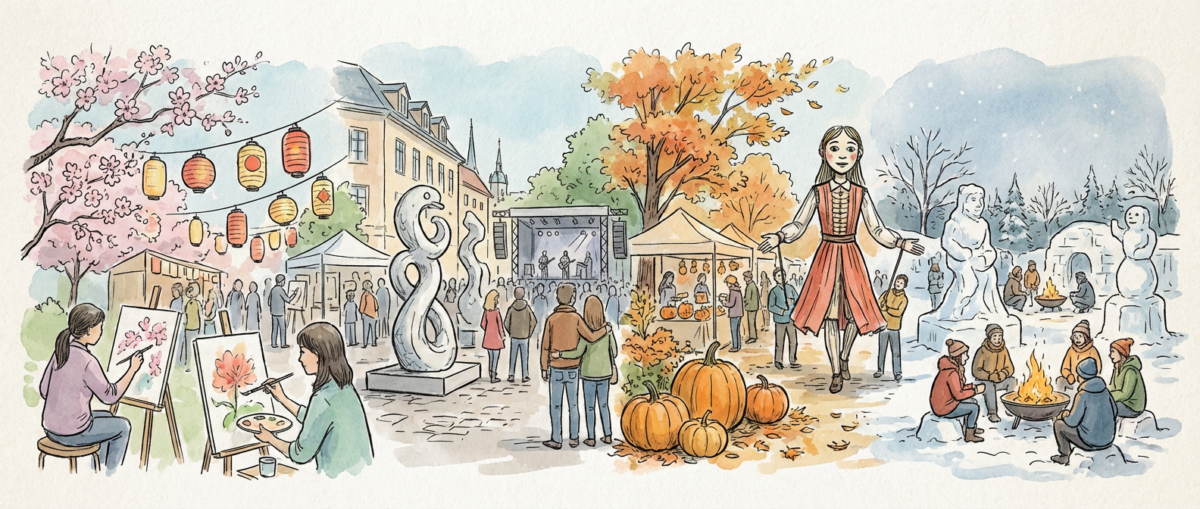
There’s something profound about watching an artist work directly with the elements. Mud between fingers, wind shifting installations, snow accumulating on sculptures throughout the night. While museums preserve art in climate-controlled sanctuaries, seasonal festivals thrust creativity into direct conversation with weather, terrain, and time itself. These gatherings are more than exhibitions. They’re laboratories where artists push against the constraints of seasons, transforming temporary limitations into permanent inspiration.

The most compelling seasonal art festivals understand this dance between creation and dissolution. They embrace the fact that winter installations will be buried under spring thaw, that summer sculptures will weather autumn storms. This temporal fragility doesn’t diminish the work, it intensifies every decision, from material selection to structural engineering. Artists working in these contexts develop an intimate knowledge of how cedar responds to humidity differently than oak, how metal contracts in cold morning air, how pigments shift under varying light throughout a single day.
Venice Biennale’s Architecture Exhibition: Where Concrete Dreams Meet Mediterranean Light
The Venice Architecture Biennale, held in odd years from May through November, transforms the Giardini and Arsenale into sprawling laboratories of spatial imagination. But it’s the relationship between these experimental pavilions and Venice’s unique atmospheric conditions that reveals the festival’s true genius. Morning light filtering through the Arsenale’s ancient windows catches dust motes and highlights the texture of raw concrete installations, while afternoon humidity softens the edges of steel frameworks until they seem to dissolve into the surrounding lagoon mist.
What gets me most is watching how architects respond to Venice’s physical constraints. The city’s foundation issues mean heavy materials require innovative engineering solutions. I’ve seen installations that use tensioned cables and counterweights to create the illusion of massive stone structures while actually distributing minimal load. The constant threat of acqua alta forces creators to design with water intrusion in mind. Some pavilions incorporate flooding as an intended design element, with surfaces that reveal hidden patterns when submerged.
The festival’s extended timeline allows for genuine seasonal transformation. September installations look entirely different from their May iterations, weathered by months of salt air and thousands of visitors. Wooden elements develop patina, metal develops oxidation patterns that become part of the aesthetic intention. By November’s closing, many works have evolved far beyond their opening-day appearance, carrying the summer’s memories in their surfaces.
Burning Man’s Temporal Architecture: Engineering for Destruction
Nevada’s Black Rock Desert provides perhaps the most extreme canvas for seasonal art creation. The festival’s late August timing coincides with some of the harshest conditions imaginable. Daytime temperatures exceeding 100 degrees, nighttime drops to near freezing, windstorms that sandblast exposed surfaces with alkali dust. These aren’t obstacles to be overcome but essential collaborators in the creative process.
The engineering required for large-scale installations in this environment is staggering. Artists must calculate wind loads that can exceed 60 mph, design foundations that work in alkaline sand that shifts constantly, and select materials that can withstand temperature swings of 70 degrees within 24 hours. I’ve watched teams spend months testing joint connections, knowing that a single failure could endanger hundreds of participants during the week-long event.
But it’s the temporal nature of Burning Man’s art that pushes creators into entirely new territories. Designing for intentional destruction requires a fundamental shift in material thinking. Traditional preservation concerns become irrelevant, replaced by questions of how structures will burn, what colors flames will produce, how collapse patterns can be choreographed. Artists work with pyrotechnicians to embed controlled demolition into their aesthetic vision, creating works whose moment of destruction becomes their ultimate expression.
Sapporo Snow Festival: Carving Time from Frozen Water
February in Hokkaido presents sculptors with a medium that exists nowhere else. Snow compressed into blocks dense enough to support detailed architectural details, yet ephemeral enough to sublime into nothing within weeks. The Sapporo Snow Festival transforms the city into a showcase of techniques that can only be practiced in specific climatic windows, using tools and methods developed over centuries of working with frozen water.
The technical knowledge required for large-scale snow sculpture astounds me. Teams must understand the crystalline structure of different snow types, how wind direction affects carving stability, the precise temperature ranges where detail work becomes possible or impossible. Traditional Japanese woodworking tools adapt beautifully to snow carving, but the medium demands entirely different approaches to structural integrity and surface finishing.
Watching master carvers work reveals techniques passed down through generations of craftspeople who understood seasonal materials intimately. They read snow conditions like manuscript illuminators once read parchment, feeling for the right moisture content, testing compression levels, anticipating how overnight freezing will affect tomorrow’s carving session. The festival’s timing maximizes these optimal working conditions while ensuring maximum public viewing before spring melt erases months of meticulous work.
Art Basel Miami Beach: Where Humidity Becomes a Medium
December in Miami might seem like the antithesis of challenging seasonal conditions, but the festival’s timing creates unique opportunities for artists working with humidity, salt air, and intense subtropical light. The coastal location means artworks contend with moisture levels that would damage most museum pieces, while the brilliant winter sunshine reveals colors and textures invisible under artificial lighting.
I’m continually amazed by how artists adapt their practices to Miami’s microclimate. Oil painters adjust their medium ratios to account for slower drying times in high humidity. Sculptors working with organic materials discover new possibilities as salt air accelerates certain decay processes while preserving others. Installation artists learn to anticipate how afternoon thunderstorms will interact with their pieces, sometimes incorporating water collection and drainage as aesthetic elements.
The festival’s beach installations particularly demonstrate this environmental collaboration. Artists working on sand must engineer temporary foundations that won’t disrupt turtle nesting while withstanding occasional king tides. Materials selection becomes crucial. Metals that would patinate beautifully inland can corrode destructively in salt spray, while certain plastics develop unexpected optical properties under subtropical UV exposure.
These festivals remind us that art’s relationship with place and time extends far beyond subject matter into the fundamental physics of creation itself. They challenge artists to work as atmospheric scientists, materials engineers, and temporal philosophers simultaneously. Each season brings opportunities for creative exploration that simply cannot be replicated in controlled studio environments, and witnessing these collaborations between human imagination and natural forces continues to reveal new dimensions of what art can become when it engages directly with the world’s magnificent unpredictability.