A Threshold Moment That Nobody Quite Expected
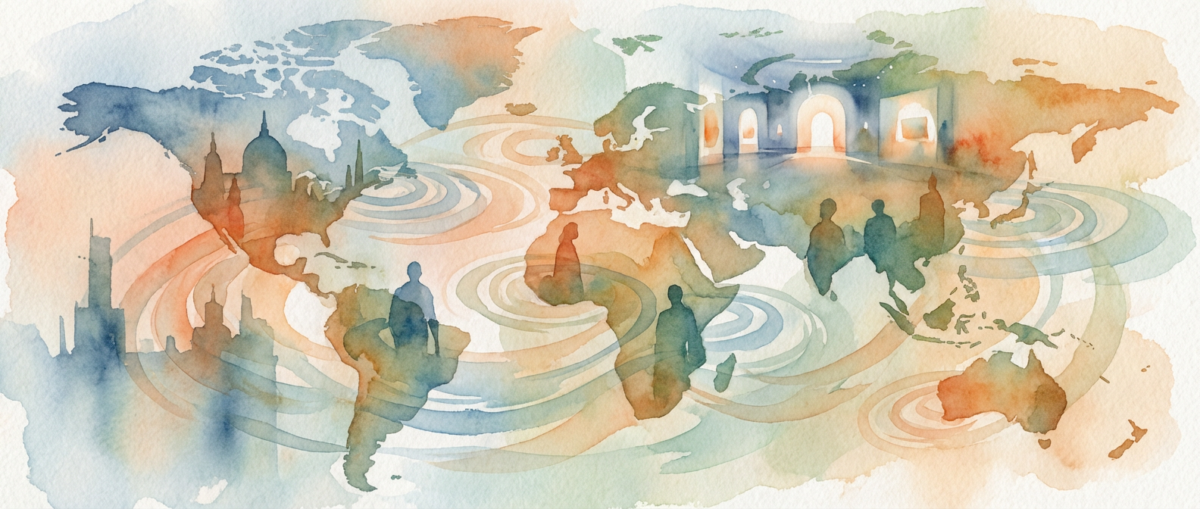
There’s a particular kind of silence that falls over the art world when something genuinely shifts beneath the surface. Not the performance silence of a white-cube gallery opening, but the real kind—the pause before everyone starts talking differently about what they do. That silence followed Adriano Pedrosa’s 2024 Venice Biennale, which opened under the title “Stranieri Ovunque” (Foreigners Everywhere) and accomplished something the event’s 129-year history had never quite managed: it centered the Global South not as an afterthought or a gesture toward inclusion, but as the primary beating heart of its main exhibition in the Central Pavilion.
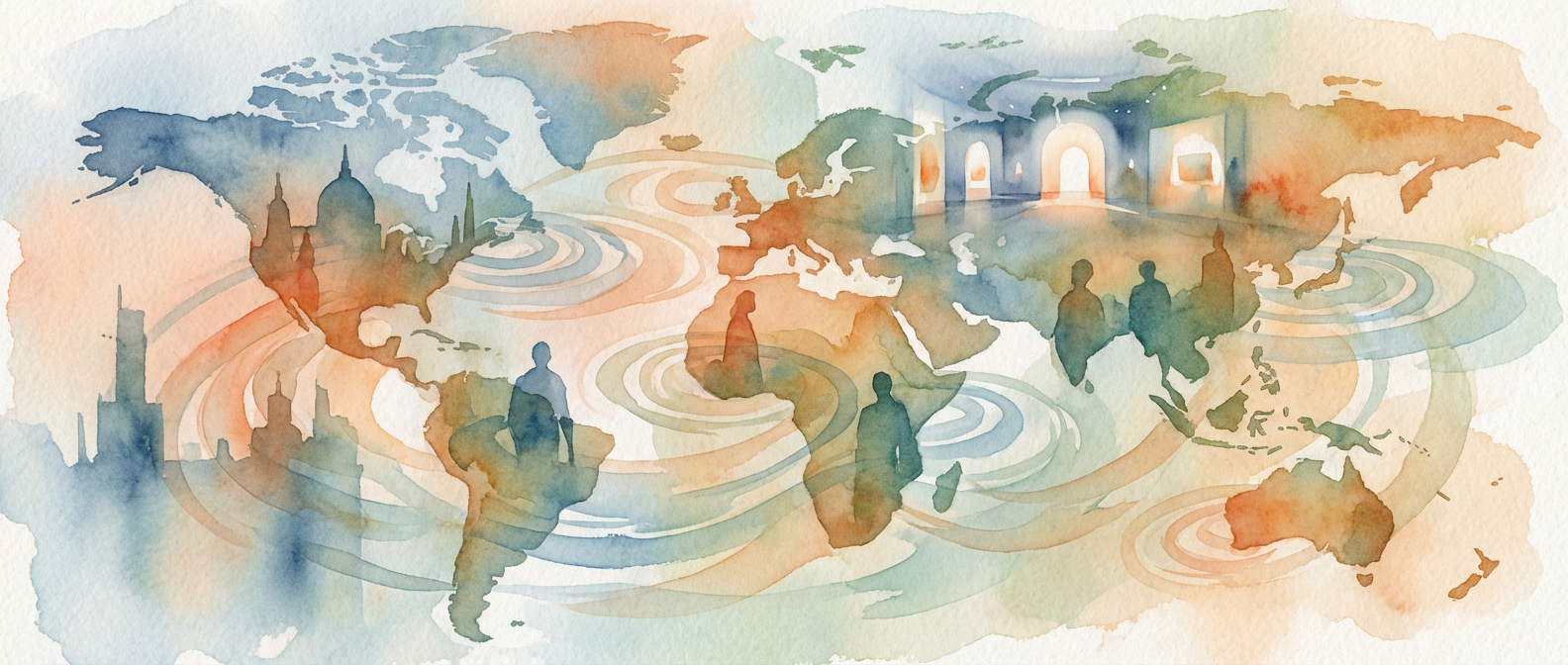
To understand what this meant, you have to sit with the numbers for a moment. Pedrosa brought together 331 artists—the highest participation in Venice’s recorded history—from across Latin America, Africa, Asia, and the Caribbean. The Central Pavilion, historically the territory where European and North American narratives have held court, became instead a space entirely devoted to Global South perspectives and practices. Over seven months, 700,000 visitors moved through these rooms, and something shifted in how they understood what contemporary art could be, where it lived, and who got to tell its story.
When Museums Started Listening
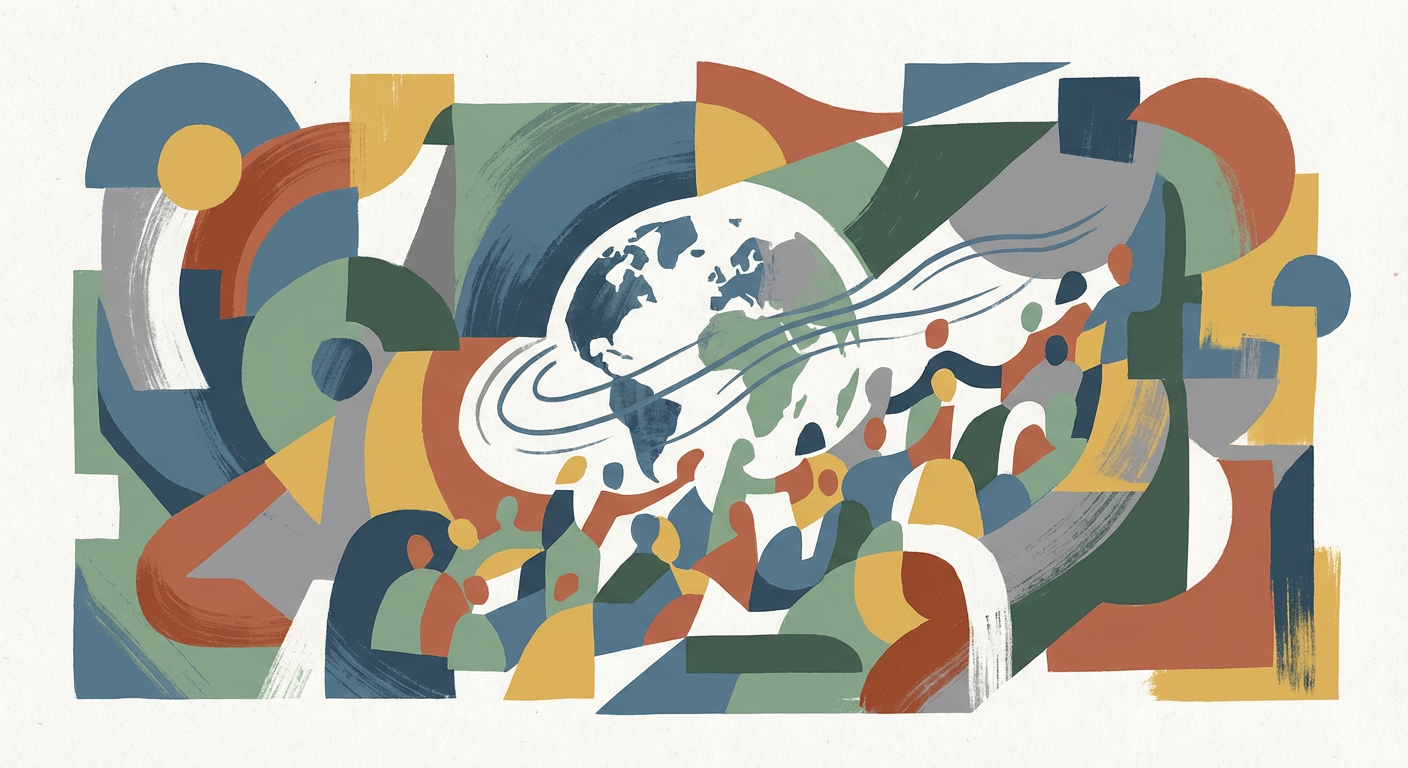
What strikes me most, looking back eighteen months later, is how quickly the ripple effects became visible. Within a year of the Biennale’s close, acquisitions of Latin American and African contemporary art at major U.S. auction houses rose by 28 percent, according to Art Basel & UBS Art Market Report 2025. That’s not a gentle uptick. That’s a reorientation. Collectors, curators, and institutions that had operated within one set of geographic priorities suddenly found themselves asking different questions.
The real impact, though, showed up in the galleries themselves. Artforum’s 2025 year-end survey of gallery directors revealed something almost unprecedented: “Stranieri Ovunque” was cited as the single biggest programming influence on group exhibition choices throughout the year. Not individual artists, not aesthetic movements, but the conceptual framework of centering Otherness, of questioning who belongs in the conversation, of dismantling the assumed center. Gallery after gallery found themselves rethinking their rosters, their lending practices, their advisory relationships. Some of this felt genuine and generative. Some of it, honestly, felt like the familiar scramble to appear relevant. But the conversation itself had transformed.
The Complicated Legacy of Being First
What makes this moment elegiac, though, is that every landmark creates its own contradictions. The 2026 Venice Biennale, already announced for April through November, has drawn immediate critical scrutiny for including three artists who also showed in Pedrosa’s 2024 edition. For critics invested in the original mandate of “Stranieri Ovunque,” the radical geographic redistribution of visibility, this feels like a breach of contract. If we’re committed to “Foreigners Everywhere,” the argument goes, shouldn’t that mean new foreigners, new voices, new geographies cycling into view?
There’s a real tension embedded here, and it deserves to be named rather than smoothed over. Pedrosa’s Biennale created a model so successful that it’s now being asked to prove itself repeatedly, to never settle into comfort, to always be expanding the circle. That’s both its greatest strength and its most exhausting demand. The artists who emerged from that 2024 moment found themselves suddenly visible at an international scale, but they also found themselves in the position of having to become the new center, which was never quite the point.
What Changed in the Room When No One Was Looking
But here’s what I keep returning to, what feels most important: the way curators and collectors began to look. I watched someone move through a group show six months after Venice and notice, really notice, how three Latin American artists in the gallery were engaged in formal conversation with each other’s work—composition, color theory, material investigation—in ways that had nothing to do with geographic identity and everything to do with artistic rigor. That person wouldn’t have paused on that connection eighteen months earlier. The framework had shifted.
You can see this in how programming language has changed across institutions. Group exhibitions that might once have been titled thematically around abstraction or figuration or materiality now frame themselves through questions of diaspora, dislocation, belonging. Museums are hosting conversations between artists from radically different continents who are investigating similar problems. The Central Pavilion’s insistence that these conversations matter has become permission for those conversations to happen everywhere.
Check out La Biennale di Venezia Official Site if you want to revisit the 2024 edition’s archive. The documentation does something interesting: it makes visible what was once invisible. You can trace the lineages, see how these artists are speaking across continents and across disciplines.
The Question That Remains
What fascinates me about this moment, looking back, is that Pedrosa’s Biennale didn’t solve anything. It didn’t make the art world suddenly equitable or dismantle the market structures that still favor certain geographies and certain narratives. But it did something more subtle and, I think, more radical: it made the current arrangement visible as a choice rather than inevitable. It showed that the center can be redrawn, that 331 artists from the Global South can hold the most prestigious international stage and be riveting, challenging, technically brilliant, conceptually rigorous. The conversation doesn’t get smaller when you expand the table. It gets deeper.
The 2026 Biennale will have to decide what it wants to be in relation to that legacy. Whether it doubles down on the geographic mandate, reframes the central mission, or honors what came before while refusing simple repetition. There’s no perfect answer, which is exactly what makes it worth watching closely.
What has your own museum or gallery experience looked like in the past eighteen months? Have you noticed shifts in how exhibitions frame themselves or who gets centered? I’d love to hear what you’ve been noticing in the rooms you move through.