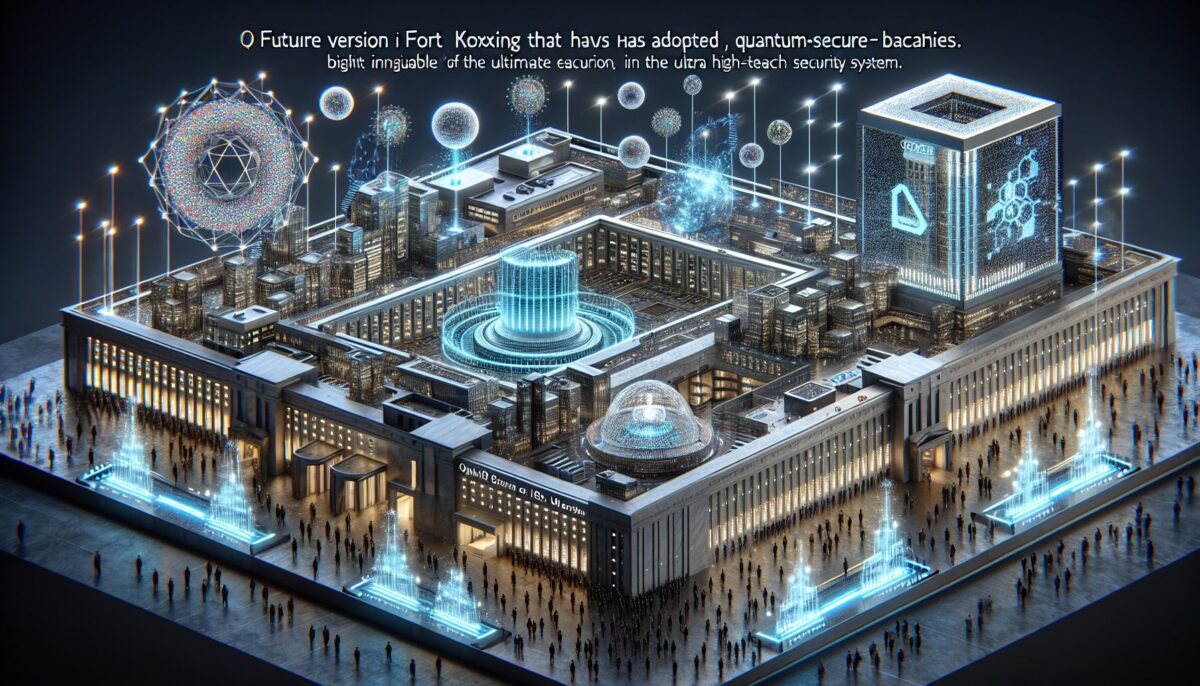
As I sip the last drops of my morning espresso, I’m not thinking about how to hustle more growth (though maybe I should). Instead, I’m pondering a question that hits the heart of banking in the 21st-century technology ecosystem: As we plunge confidently into the quantum era, how do we make our digital Fort Knox quantum-safe? In a world where bits morph into qubits, protecting digital assets against the looming quantum threat isn’t just a necessity, it’s an inevitability. Strap in, because today we’re going deep into the cyber rabbit hole.
The Quantum Conundrum: A Hacker’s Paradise?
You know how we used to joke about hackers being glorified script kiddies back in the day? Well, quantum computing is making that joke obsolete. It’s like giving a toddler the keys to a lightspeed spaceship. The anticipated computational power of quantum systems will turn some of today’s strongest encryption methods into wet tissue paper. With Shor’s algorithm threatening to crack RSA encryption like an egg, our beloved digital fortresses will soon stand naked in a world of million-core predators.
What’s cooking in the regulatory kitchen to address this nightmare, you ask? Not much, which is as comforting as a warm blanket made of hundred-dollar bills, both won’t save you in a blizzard. Governments are slowly moving towards setting standards, with agencies like NIST beginning to draft PQC (post-quantum cryptography) frameworks. But if you’ve got a crypto-bag under the mattress, let’s just say: Don’t wait for Uncle Sam to fortify it.
The Tech Wunderkind: PQC to the Rescue
Into the breach steps post-quantum cryptography, our shiny new knight-coder in curly brackets. The math behind PQC is designed to counter potential quantum attacks by using algorithms that could withstand a quantum onslaught. Code words like lattice-based cryptography, hash-based signatures, and multivariate polynomial equations are replacing our traditional encryption conversations.
Look, I’m not saying you should rewrite your codebase overnight. But as creators on the bleeding edge, the writing on the wall, dare I say, in code comments, suggests a pivot is only prudent. So keep an eye on these new standards while embracing certified libraries as soon as they’re practical. After all, no one wants to be caught with their code pants down when the quantum wolves come knocking.
Crypto Irony: Blockchain’s Awkward Quantum Dance
Picture blockchain: the decentralized dream, the distributed ledger of legends, taking a hit on the very tenet it was created upon, security, and immutability. A quantum adversary could unravel the ‘immutable’ history of the blockchain faster than you can say “proof-of-work”. The irony is delicious, right?
Now imagine being a blockchain developer with a front-row seat to this unfolding drama. Quantum threats are effectively the new ‘original sin’ we need to deal with. The good news? Quantum-safe algorithms are already being integrated into blockchain protocols. The bad news? Quantum-readiness isn’t uniform or standardized. This transition isn’t a flip of a switch. It’s more like programming in assembly with one eye closed.
A Global Arms Race: The Quantum Geopolitics
Let’s divert our gaze to the macro view for a second. Just as every nation once raced to develop the atomic bomb, every global superpower is now locked in a quantum computing arms race. But this isn’t about mushroom clouds and radiation, it’s about cyber sovereignty and, quite possibly, economic dominance. The country that cracks the quantum code first gets to wield unprecedented power over digital infrastructures worldwide.
Remember, cyber conflicts have no Geneva Conventions. So as builders, strategists, and mischief-makers of the digital era, watching how states position their quantum pawns is important. Geopolitical maneuverings will, directly and indirectly, shape policy frameworks that can either promote innovation or stifle it beneath a load of red tape.
Building Quantum Fortresses: The Cost and the Craft
The paradox of progress means that as technology advances, so do its associated costs. Quantum-secure banking will require more than just firewalls, it’ll need a complete reassessment of existing protocols with potentially hefty price tags. Think of it as renovating the hairiest, oldest codebase you ever inherited while trying to keep it running in production.
But given the pace of digital transformation, ignoring this evolution would be like a chef ignoring expiration dates. We have to be proactive about investing in quantum safeguards today. It’s not just about avoiding a fiasco. It’s about chasing competitiveness in this brave new world.
Takeaway: Coding Today for Tomorrow’s Threats
In a world where bytes do battle with qubits, ensuring the security of digital financial systems against quantum threats is the new frontier. It’s a standoff between today’s innovations and tomorrow’s problems, and, as ever, the coders at the heart of it all need to prepare, pivot, and persevere.
So, fellow builders, how will you adapt your product strategies in light of quantum computing? Which encryption protocols will see you through to the other side? Grab your compilers and join the conversation: Will you be ready when the qubits come calling?