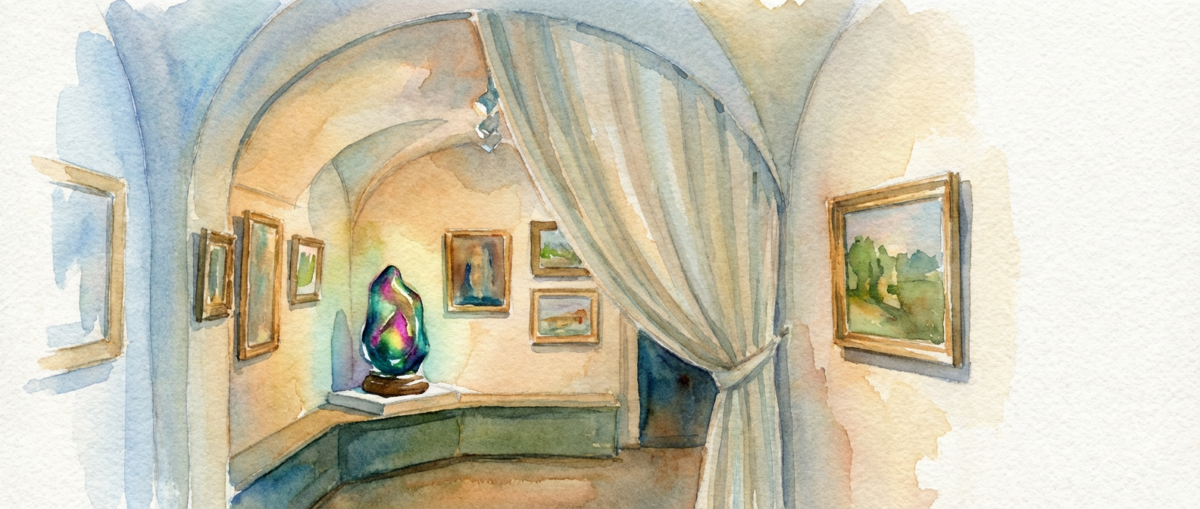
The Conspiracy of Cultural Capital
Let me tell you something the art establishment hopes you never figure out: those small town museums tucked away in converted Victorian mansions and repurposed train stations are quietly housing some of the most revelatory art experiences you’ll ever encounter. While everyone flocks to the Met or MoMA, posting obligatory selfies with Starry Night, they’re missing the real revolution happening in places like the Figge Art Museum in Davenport, Iowa, where you can stand inches away from a Grant Wood painting and actually see how he built those rolling hills layer by microscopic layer.
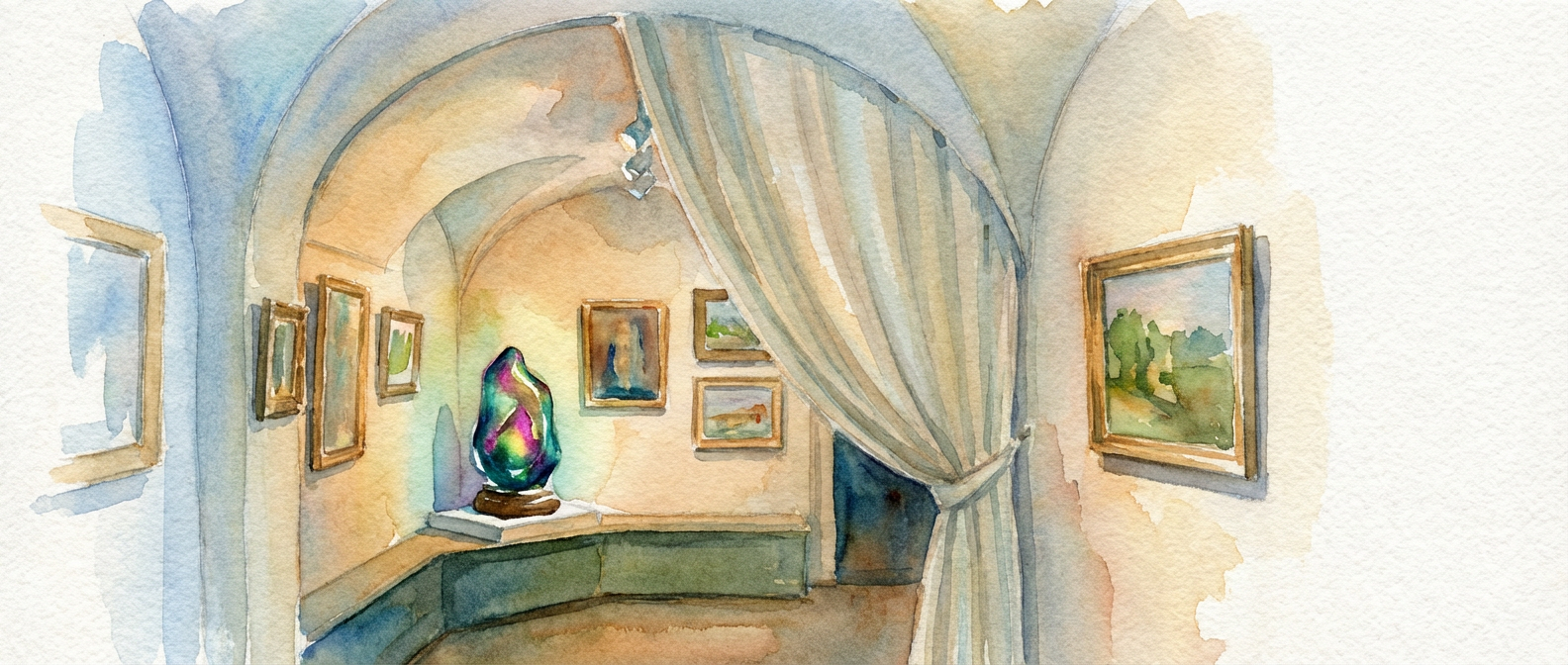
The big institutions became victims of their own success, drowning in crowds and choking on their curatorial orthodoxy. They’re too busy protecting their brand and managing visitor flow to take the kinds of risks that make art dangerous and transformative. Meanwhile, that little museum in your hometown quietly mounts exhibitions that would make Chelsea gallery owners weep with envy, if only they could see past their own metropolitan myopia.
Consider the Brandywine River Museum of Art in Pennsylvania, where you can trace three generations of Wyeth family genius without fighting through tour groups or listening to someone’s loud phone conversation echoing off marble walls. The intimacy changes everything. You start to notice how N.C. Wyeth’s dramatic illustrations influenced his son Andrew’s hyperrealist technique, which then evolved into grandson Jamie’s contemporary abstractions. It’s a masterclass in artistic DNA that no blockbuster exhibition could ever reproduce.

The Curatorial Freedom That Comes With Obscurity
Small town museums operate under different rules, and thank god for that. They’re not beholden to board members whose primary concern is donor relations or attendance figures that satisfy municipal budgets. This freedom produces some of the most thoughtful, unexpected programming you’ll find anywhere. The Butler Institute of American Art in Youngstown, Ohio, regularly puts 19th-century Hudson River School paintings next to contemporary video installations, creating conversations about landscape and technology that major museums wouldn’t dare attempt without six months of committee meetings.
I’ve watched curators at these smaller institutions take risks that would send Met executives into panic attacks. The Shelburne Museum in Vermont once displayed a Monet water lily painting next to a 1950s carousel horse, both positioned to catch the same northern light streaming through tall windows. The effect was brilliant. Suddenly you could see how both artists understood the relationship between surface and depth, between movement and stillness. Try explaining that concept to a blockbuster exhibition planning committee.
These curators aren’t climbing career ladders or positioning themselves for tenure at prestigious universities. They’re true believers, often scholars who chose passion over prestige. They know their collections inside out because they’ve lived with these works for years, sometimes decades. When the curator at the Rockwell Museum in Corning, New York, describes how Norman Rockwell achieved that particular shade of autumn light in “Freedom from Want,” she’s not reciting catalog copy. She’s sharing discoveries made during countless hours of direct observation.
The Radical Act of Seeing Without Mediation
Here’s what the major museums will never admit: their success became their greatest liability. The endless streams of visitors, the mandatory audio guides, the barrier ropes and security guards, all of it conspires to keep you from actually experiencing art. You’re consuming it instead, checking boxes on a cultural to-do list. But walk into the Munson-Williams-Proctor Arts Institute in Utica, New York, on a Tuesday afternoon, and you might find yourself alone with a room full of Thomas Cole landscapes. Alone. With genius. For as long as you want.
This solitude transforms everything about how art works. Without crowds pressing behind you, you can step back and forth, watching how a painting changes with distance and angle. You can notice how the brushwork in a Winslow Homer seascape becomes more abstract as you move closer, how those churning waves dissolve into pure gesture and color. You start to understand that painting is a physical act, not just a visual one. The artist’s hand becomes visible in ways that reproduction and overcrowding make impossible.
I remember standing in the Hyde Collection in Glens Falls, New York, watching afternoon light move across a Degas pastel. For twenty minutes, the changing light revealed new layers of color, different tensions in the composition. The dancer’s pose shifted subtly as shadows deepened and highlights emerged. It was like watching the artist work, seeing the painting complete itself in real time. No major museum would tolerate a visitor lingering that long, and artificial lighting would have eliminated the natural drama entirely.
Regional Identity as Radical Curation
The most subversive thing about small town art museums isn’t what they collect, it’s how they frame it. These institutions understand that art doesn’t exist in a vacuum, that regional history and local culture aren’t obstacles to overcome but essential parts of interpretation. The Montclair Art Museum in New Jersey doesn’t just display George Inness paintings. It shows you how his romantic landscapes reflected specific philosophical and social movements that shaped 19th-century American culture, particularly in the Northeast.
This approach produces insights that cosmopolitan institutions miss entirely. The Arnot Art Museum in Elmira, New York, has an extraordinary collection that reflects the industrial boom of the late 1800s, when local business magnates competed to acquire European masterworks. But instead of presenting these as decontextualized treasures, the museum explores how American industrialists used art to construct cultural legitimacy. Suddenly, a room full of academic paintings becomes a complex story about class, taste, and national identity.
The regional perspective also allows for unconventional comparisons and unexpected discoveries. The Everson Museum in Syracuse can display a Rothko chapel painting alongside ceramics by Adelaide Robineau, both created within fifty miles of each other but exploring entirely different approaches to spiritual expression through color and form. These local connections create new ways of understanding art that transcend traditional categories and periods.
The Future Belongs to the Margins
As major museums struggle with attendance drops, funding crises, and mounting criticism about accessibility and representation, small town institutions are quietly pointing toward a more sustainable future for arts culture. They’ve always operated with limited resources, forcing innovation and creativity that bigger institutions can learn from. They’ve maintained authentic relationships with their communities instead of treating visitors as consumers to be processed efficiently through predetermined experiences.
The most exciting contemporary art conversations are happening in these overlooked spaces. The Museum of Art and History in Lancaster, California, recently mounted an exhibition exploring how aerospace industry workers in the Antelope Valley created art during their off hours, revealing a hidden creative community that challenges every assumption about who makes art and where it matters. No major museum would have the local knowledge or institutional flexibility to pursue such a project.
What excites me most is how these museums are redefining what cultural authority looks like. Instead of dictating taste from above, they’re showing how deep engagement with specific places and communities can produce universal insights. They’re proving that the future of art appreciation isn’t about bigger crowds or more famous names. It’s about creating conditions for genuine encounter and discovery.
So next time you plan a cultural pilgrimage, skip the tourist traps and seek out the converted mansion or former bank building that houses your region’s hidden collection. Spend an afternoon discovering what your local curators have been quietly protecting and celebrating. You might find that the most profound art experiences have been waiting in your own backyard, ready to challenge everything you thought you knew about seeing and understanding art.