The Night Two Victories Told Completely Different Stories
There’s a particular kind of tension that emerges when art and technology collide at precisely the same cultural moment, and this year’s Academy Awards gave us a sharp example of exactly that. Jacqueline Durran walked away with her third Oscar for Best Costume Design, after orchestrating the creation of over 1,200 individually handmade garments for a period film that demanded serious historical fidelity and uncompromising craftsmanship. Her win represented the kind of achievement we’ve celebrated for decades: human skill built through years of practice, the marriage of research and intuition, hands-on problem-solving in real time on set. And yet, by the following morning, the conversation had largely moved away from Durran’s triumph to focus on a gown worn by a nominated actress—a dress designed using Midjourney V7 and fabricated through parametric manufacturing processes by the Paris atelier Iris van Herpen. The internet had made its choice about what mattered most.
What strikes me most about this moment isn’t that it represents a threat to traditional costume design, though that conversation matters too. It’s that both achievements are genuine, and neither one cancels the other out. Yet the wildly disproportionate attention paid to the AI-assisted gown suggests we’re experiencing a real shift in how we value different kinds of creative labor. The dress was extraordinary—sculptural, precise, otherworldly in ways that seemed genuinely impossible before computational design made such forms manufacturable. Durran’s costumes were equally extraordinary in entirely different ways: historically grounded, emotionally resonant, created through accumulated knowledge of how fabric behaves when a human hand guides it.
Vogue’s digital coverage told the real story about which victory landed more broadly. The magazine’s post-ceremony digital issue featuring the AI-assisted gown pulled 4.2 million page views within 24 hours, the highest single-day traffic for any fashion feature in Vogue’s entire online history. Sit with that for a second. Not a retrospective on a legendary designer, not coverage of a revolutionary collection—a single dress created with algorithmic assistance. The numbers suggest that novelty and the conceptual break from tradition had captured something in the cultural imagination that traditional excellence, however masterful, couldn’t quite reach.
What We’re Actually Measuring When We Measure Success
Here’s where the comparison gets genuinely productive rather than merely competitive. Both Durran and the AI-assisted gown represent legitimate forms of innovation, but they’re solving different problems and appealing to different values. Durran’s achievement speaks to historical authenticity, the relationship between costume and character development, and the irreplaceable value of a designer who can stand on set and make real-time decisions when something isn’t working. She’s solving problems that require contextual knowledge, intuition about performance, and the kind of judgment that only comes from years of thinking through how fabric and light interact with human movement.
The parametrically designed gown solved a different set of problems entirely. It created a form that would have been extraordinarily difficult, maybe functionally impossible, to realize through conventional tailoring. It pushed the boundaries of what we think of as wearable sculpture. The designer used computational tools to explore aesthetic possibilities that exist in a completely different conceptual space than traditional garment construction. Neither approach is inherently superior. They’re approaching design from different philosophical positions.
But here’s where it gets complicated, and where I think the real conversation needs to happen. Durran’s 1,200 handmade garments represent not just artistic vision but also the employment of skilled artisans, pattern makers, seamstresses, and dyers. There’s an entire ecosystem of human craft embedded in that achievement. The AI-assisted gown, for all its genuine innovation, required far fewer hands to bring to life, involved different kinds of technical expertise, and points toward a future where entry points into fashion design work may look radically different than they do today.
The Economics of Innovation and the Question of Access
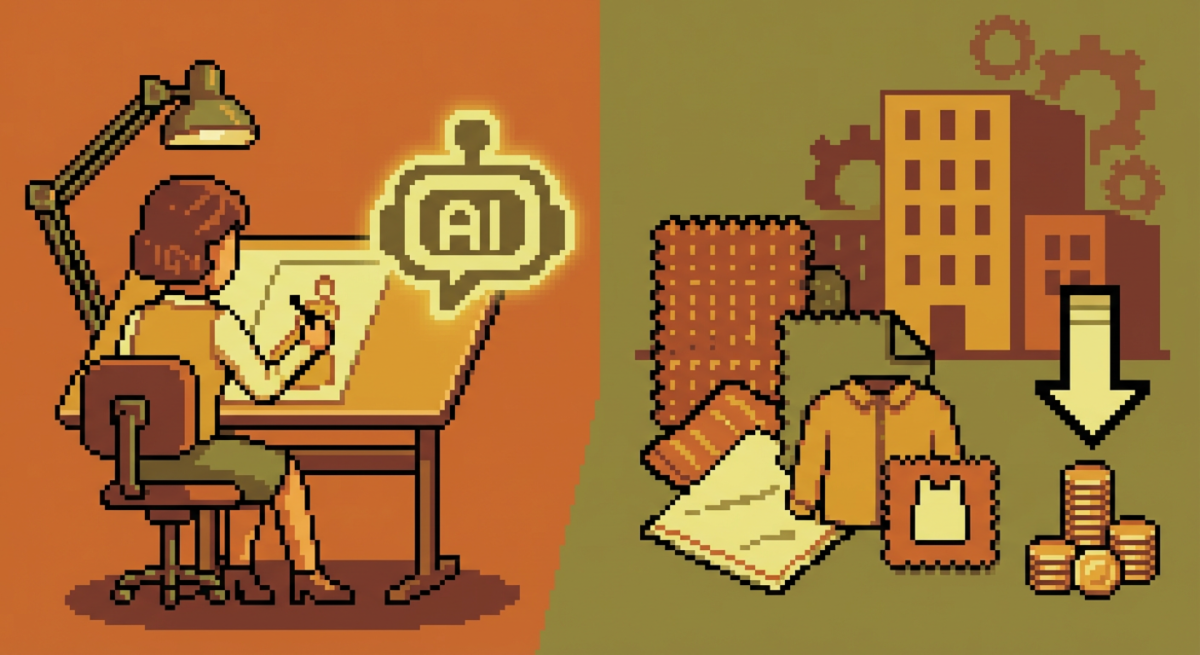
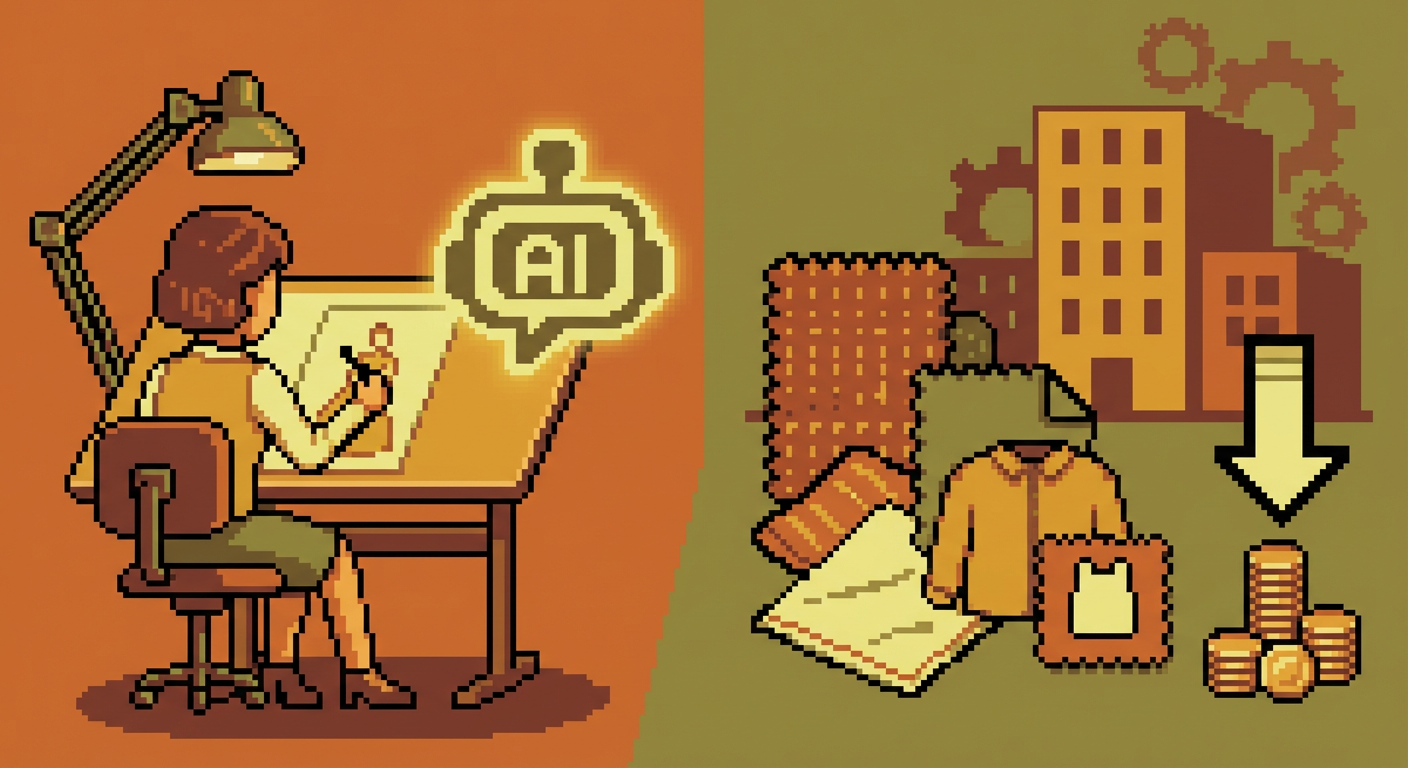
A 2025 McKinsey report offered some sobering projections about this trajectory. According to their analysis, AI-assisted fashion design tools would likely displace approximately 30% of entry-level fashion illustration jobs by 2028 while reducing sample production costs by as much as 45%. Those numbers sit in uncomfortable relationship to one another. Yes, the technology makes certain kinds of design work faster and cheaper. Yes, it democratizes access to tools that were previously unavailable to designers without substantial financial resources. But it also eliminates the pathway through which many young designers have historically learned their craft, contributed to their field, and built careers.
This is where I kept thinking about a friend who teaches fashion illustration to undergraduates. She was watching the same Oscars coverage I was, and I could practically feel her anxiety through our text conversation. She’s acutely aware that the skills she’s teaching—how to render fabric, how to develop a visual language for design ideas—might become less relevant in a world where computational tools can generate iterations in seconds. That’s not a trivial concern. It’s a real displacement of real people and real career paths.
The Council of Fashion Designers of America recognized this tension enough to issue a formal statement calling for mandatory AI disclosure requirements on red carpet garments. According to their March 2026 statement, 78% of their member designers supported requiring labels indicating when AI had played a significant role in garment design or creation. It’s a pragmatic approach—not attempting to ban the technology, but seeking transparency about which tools made which choices. It acknowledges that both forms of design can coexist, while arguing that the fashion industry and the public deserve to know which is which.
The Question Beneath the Question
What genuinely fascinates me about this moment is that it forces us to confront what we actually value when we talk about artistic achievement. We say we value innovation, but when innovation arrives in a form that feels too algorithmic, too computational, something in us resists. We say we value efficiency and accessibility, but then we’re troubled by the thought that efficiency might come at the cost of traditional craft knowledge and the opportunities those crafts provide. We celebrate technology’s potential to expand creative possibility, but worry about what gets lost when certain kinds of human labor become less necessary.
I don’t have a clean answer to any of this. What I do know is that Durran’s third Oscar represents something real and valuable about human expertise, years of accumulated knowledge, and the irreplaceable judgment that comes from deep experience in a craft. And the parametrically designed gown represents something equally real about what becomes possible when computational tools expand our aesthetic vocabulary. The fact that one captured the institution’s recognition and the other captured the internet’s attention tells us something important about how these different forms of value are being negotiated right now, in the actual culture we’re living in.
So What Actually Won?
Honestly? I think both won. Durran’s Oscar represents a genuine recognition that traditional craft excellence still matters and still deserves the highest honors the industry can give. But the AI-assisted gown’s viral dominance represents something we can’t ignore: a real fascination with what becomes possible at the intersection of human creative vision and computational capability. The conversation we need to have isn’t about which one is the “real” winner. It’s about how we build a creative ecosystem that values both, that provides pathways for both kinds of designers, that doesn’t let efficiency hollow out opportunity.
What struck you most about this moment? Are you more moved by Durran’s mastery of traditional craft, or by the aesthetic possibilities that computational design opens up? The answer probably depends on what you think fashion design is for, what you believe creativity requires, and what kind of future you want to see in the industries that shape how we look and feel.