Categories
Main

The Ancient Hand in Modern Clay: How Millennia-Old Techniques Shape Contemporary Ceramics

When Past Meets Present in the Potter’s Studio

Walk into any contemporary ceramics studio today, and you’ll see something pretty amazing: artists reaching across thousands of years to use techniques that predate written language itself. The wheel spinning under their hands connects them directly to potters in ancient Mesopotamia, while the glazes they mix echo formulas first developed in Tang Dynasty China. This isn’t just nostalgia or romantic attachment to the past. Modern ceramicists get what art historians have long recognized—that the most interesting innovations often come from a deep conversation with tradition.

The Ancient Hand in Modern Clay: How Millennia-Old Techniques Shape Contemporary Ceramics

Take Ai Weiwei, who creates massive installations of deliberately broken Han Dynasty-style vases that say everything about cultural continuity and destruction. His technique draws directly from methods perfected over two millennia ago, yet his conceptual framework is completely contemporary. This combination shows how ancient ceramic techniques provide not just technical knowledge, but a rich vocabulary of cultural meaning that modern artists can manipulate, subvert, and celebrate.

The relationship between ancient and modern ceramics really shows itself in the workshop, where contemporary potters find themselves rediscovering principles that have remained unchanged since humans first shaped clay around fire. The basic physics of clay bodies, the chemistry of glazes, the behavior of kilns—these constants create an unbroken chain of knowledge that makes ceramics unique among the arts in maintaining direct technical continuity with its deepest historical roots.

Illustration for The Ancient Hand in Modern Clay: How Millennia-Old Techniques Shape Contemporary Ceramics

The Resurrection of Raku and the Philosophy of Imperfection

No ancient technique has grabbed modern attention quite like raku, the 16th-century Japanese firing method that turns clay into something resembling controlled chaos. Originally developed for tea ceremony bowls, raku embraces the Japanese aesthetic principle of wabi-sabi—finding beauty in imperfection and impermanence. When contemporary ceramicist Paul Soldner reintroduced raku to Western artists in the 1960s, he wasn’t simply importing a technique. He was introducing an entirely different philosophy about how art should relate to chance, time, and the artist’s control.

Modern raku is quite different from its historical predecessor, yet the essential principle stays the same: pottery gets removed from the kiln while red-hot and subjected to rapid cooling that creates unpredictable crackling patterns and metallic lusters. Contemporary artists like Steven Hill and Rick Hirsch have pushed these boundaries further, developing hybrid techniques that combine raku principles with modern materials and firing methods. Their work shows how ancient techniques can launch entirely new artistic territories rather than just historical recreations.

What makes raku’s modern revival really interesting is how it challenges Western ideas of artistic control and perfection. Where European ceramic traditions emphasized technical mastery and predictable results, raku celebrates the marriage between human intention and natural forces beyond the artist’s control. This philosophical shift has influenced far more than just firing techniques. It has encouraged contemporary ceramicists to embrace experimentation, accident, and collaboration with their materials in ways that echo ancient beliefs about clay as a living substance.

Terra Sigillata and the Alchemy of Surface

The lustrous, almost metallic surfaces that characterize the finest ancient Roman pottery might seem impossible to achieve without modern industrial processes, yet contemporary ceramicists have not only mastered terra sigillata but have expanded its possibilities beyond anything the ancients imagined. This technique, whose name literally means “sealed earth,” involves burnishing clay with an ultra-fine slip that creates surfaces of extraordinary smoothness and subtle color variation when fired at relatively low temperatures.

Artists like Magdalene Odundo have elevated terra sigillata from historical curiosity to high art, creating vessels whose surfaces seem to glow from within. Her work shows how ancient surface treatments can carry contemporary sculptural concepts. Her forms reference both African pottery traditions and modernist sculpture, while her terra sigillata surfaces create an almost otherworldly presence that speaks to universal human responses to beauty and craftsmanship. The technique lets her achieve surface qualities that would be impossible with glazes, creating depth and luminosity that changes dramatically under different lighting conditions.

The scientific understanding of why terra sigillata works—the physics of particle alignment during burnishing, the chemistry of iron oxide reduction during firing—has allowed modern artists to push the technique far beyond its Roman origins. Contemporary ceramicist Duncan Ross has developed terra sigillata variations that incorporate metallic oxides and modern colorants, creating surfaces that shift between matte and metallic depending on viewing angle and lighting. These innovations show how technical understanding can expand artistic possibilities while maintaining connection to ancient wisdom.

Pit Firing: Embracing the Elemental

Long before kilns existed, humans were firing pottery in pits dug into the earth, surrounded by combustible materials that created the heat and atmospheric conditions necessary for ceramic transformation. This most ancient of firing methods has experienced a remarkable comeback among contemporary artists who value both its unpredictable aesthetic results and its connection to humanity’s earliest ceramic experiments. The technique produces surfaces marked by smoke patterns, carbon trapping, and flame flashing that create unique, unrepeatable effects on each piece.

Contemporary artist Maria Martinez, building on centuries-old Pueblo traditions, elevated pit firing from functional necessity to high art through her development of black-on-black pottery that achieves stunning contrasts through careful manipulation of firing atmospheres. Her work bridges ancient technique and modern artistic recognition, showing how traditional methods can achieve sophisticated aesthetic effects that rival any contemporary firing process. The deep blacks and subtle textures she achieved through pit firing have influenced generations of modern ceramicists who seek similar organic surface qualities.

Modern practitioners like Sumi von Dassow have documented and expanded pit firing techniques, creating comprehensive guides that allow contemporary artists to achieve consistent results while preserving the element of surprise that makes the process so compelling. Their work reveals how ancient techniques benefit from modern understanding—systematic documentation of variables like fuel types, pottery placement, and weather conditions allows artists to work more intentionally with unpredictable processes. This marriage of ancient wisdom and contemporary methodology shows how traditional techniques can evolve without losing their essential character.

The Living Tradition of Technical Innovation

What comes through clearly when examining these ancient techniques in modern practice is a recognition that ceramics has always been fundamentally experimental. The potters who first developed raku, terra sigillata, and pit firing were innovators working at the cutting edge of their material understanding, just as contemporary ceramicists continue to push boundaries today. The difference lies not in the spirit of experimentation, but in the depth of technical knowledge available to modern practitioners.

Contemporary ceramicist Peter Voulkos revolutionized American ceramics in the 1950s by combining ancient hand-building techniques with an Abstract Expressionist sensibility, creating monumental sculptures that challenged the boundary between craft and fine art. His work shows how ancient techniques can support entirely new artistic visions. His understanding of clay’s plastic properties, learned through traditional throwing and hand-building methods, enabled him to create forms of unprecedented scale and expressive power that influenced both ceramics and sculpture for generations.

The continued vitality of ancient ceramic techniques in contemporary practice speaks to something deeper than nostalgic revival or craft tradition preservation. These techniques survive because they represent fundamental discoveries about how humans can collaborate with natural materials and elemental forces to create objects of lasting beauty and meaning. Each time a contemporary artist chooses terra sigillata over commercial glazes, or builds a pit fire rather than using an electric kiln, they’re participating in an unbroken chain of human creativity that stretches back to our species’ earliest artistic expressions. The clay remembers these ancient conversations between human hands and earth, and continues to teach anyone willing to listen to its lessons about patience, observation, and the deep satisfaction of making something beautiful from the most humble materials.


Categories
Main

The Last Hands: How Master Weavers Carried Forward Five Thousand Years of Thread and Memory

The Quiet Revolution in Every Stitch

When Yoshiko Wada passed away in 2021, the textile world lost more than a master of traditional Japanese indigo dyeing. We lost a living bridge between ancient knowledge and contemporary understanding, someone who could trace the molecular structure of indigo’s binding properties while simultaneously explaining how her grandmother’s careful attention to moon phases affected the fermentation process. Wada spent decades documenting techniques that existed only in the muscle memory of aging artisans, translating centuries of intuitive knowledge into language that could survive the deaths of its keepers.

The Last Hands: How Master Weavers Carried Forward Five Thousand Years of Thread and Memory

Her work reflects a broader urgency rippling through textile communities worldwide. From the backstrap loom weavers of Guatemala to the last practitioners of Kashmiri pashmina spinning, master craftspeople are aging out of traditions that took generations to develop. Unlike painting or sculpture, textile arts carry technical knowledge that you can’t learn from observation alone. The tension required to warp a loom, the precise timing of mordant application, the subtle variations in hand pressure that create a fabric’s distinctive character, these exist in bodies, not books.

This embodied knowledge faces a particularly modern form of extinction. Museums carefully preserve finished textiles under climate-controlled glass, but the processes that created them often die with their makers. We can analyze the chemical composition of a Tang dynasty silk, map every thread in a Navajo wedding blanket, but we can’t resurrect the specific way sunlight filtering through workshop windows told a weaver when the dye bath had reached perfect readiness.

The Geography of Forgotten Techniques

Consider the fate of sea silk, once harvested from Mediterranean pen shells and woven into fabric so fine it was reserved for religious vestments. Only one woman, Chiara Vigo of Sardinia, still practices this ancient art, spinning threads from the byssal filaments that anchor mollusks to the seafloor. Her knowledge includes not just the mechanical process of harvesting and preparation, but an intimate understanding of lunar cycles, water temperatures, and the precise locations where the shells grow large enough to yield workable fiber.

Vigo’s situation mirrors that of countless other textile guardians. In Kashmir, fewer than a dozen families still possess the complete knowledge of pashmina processing, from selecting the finest underhair of Changthangi goats to the seventeen distinct steps of traditional spinning. The Chinese art of kesi tapestry weaving, which creates silk so detailed it was called “carved silk,” now survives in the hands of perhaps thirty masters. Each is not just individual skill, but generations of accumulated refinement passed down through bloodlines and workshop hierarchies.

These traditions developed their sophistication through constant dialogue between maker and material. Highland Peruvian weavers developed over forty distinct techniques for working with vicuña fiber, each responding to the unique properties of hair that grows at altitudes where oxygen thins and weather shifts without warning. Their knowledge reads like poetry: how morning frost affects fiber flexibility, which mountain slopes produce the strongest dyes, why certain patterns must be woven during specific seasons to achieve their intended spiritual protection.

The Archive of Hands

What we’re witnessing isn’t just the end of specific techniques, but the dissolution of entire systems of knowledge that connected textile making to broader cultural understanding. Traditional textile production embedded ecological wisdom, spiritual practice, and social organization into every thread. When Andean communities chose specific plants for dyes, they weren’t just selecting colors but maintaining relationships with landscapes that had sustained their ancestors for centuries.

The loss extends beyond technique to ways of seeing that shaped how cultures understood their relationship to materials and time. Japanese sashiko stitching emerged from the necessity of mending and extending the life of precious fabric, but evolved into an aesthetic philosophy that found beauty in the visible traces of repair. The technique taught practitioners to see worn cloth not as failure but as opportunity for transformation. This worldview, embedded in every careful stitch, offered a different relationship to permanence and decay than our contemporary throwaway culture.

Similar philosophies lived within West African strip weaving traditions, where master weavers learned to read social and spiritual meanings in the interaction of pattern and color. A cloth’s design could indicate the wearer’s clan affiliation, marital status, and spiritual protection needs while simultaneously working as a form of historical record, encoding information about trade relationships, seasonal ceremonies, and community events. The weaver worked as artist, historian, and spiritual intermediary, roles that required decades of training to fully integrate.

Resurrection and Remembering

Yet loss creates its own forms of preservation. The recognition that these traditions face extinction has sparked urgent documentation efforts, though they often struggle to capture knowledge that exists in relationship rather than isolation. Video recordings can show hand movements but miss the subtleties of pressure and rhythm that develop through years of practice. Written descriptions fail to convey the sensory knowledge that guides decisions about when clay mordants have achieved proper consistency or how temperature changes affect natural dye uptake.

The most successful preservation efforts have focused on creating new relationships rather than simply recording old ones. Projects that pair aging masters with younger practitioners, provide economic incentives for continued practice, and create markets that value traditional methods show promise for maintaining living traditions rather than museum pieces. In Japan, the designation of Living National Treasures has helped sustain traditional textile arts by providing financial support and official recognition to master practitioners.

Contemporary artists have also begun incorporating traditional techniques into new contexts, creating hybrid practices that honor ancestral knowledge while speaking to current concerns. Artists like Sheila Hicks have spent careers exploring how ancient textile techniques can address contemporary questions about space, color, and materiality. Their work suggests that traditional knowledge doesn’t need to be preserved in amber but can continue evolving when approached with sufficient respect and understanding.

The Thread Continues

The elegiac nature of this moment shouldn’t obscure its creative potential. Every tradition we mourn once was innovation, adaptation, and creative response to specific environmental and cultural pressures. The challenge facing contemporary textile culture isn’t simply preserving the past but understanding how traditional knowledge can inform responses to current conditions.

Climate change, resource scarcity, and social fragmentation create new pressures that traditional textile knowledge might help address. Ancient techniques for working with local materials, creating durable goods, and embedding meaning into functional objects offer alternatives to industrial production methods that have proven environmentally and socially unsustainable. The question isn’t whether we can return to pre-industrial textile production but how we might learn from its accumulated wisdom.

This learning requires more than technical instruction. It demands engagement with different ways of understanding the relationship between maker, material, and meaning. Traditional textile knowledge can teach us patience, attention to materials, and the pleasure of work that connects hands directly to finished objects. It can also demonstrate how creative practice might help community needs while expressing individual vision and connecting practitioners to larger systems of meaning and belonging.

The threads that connect us to five thousand years of textile knowledge grow thin but haven’t broken yet. Each time someone picks up a spindle, sets up a loom, or mixes a dye bath using traditional methods, they participate in the longest continuous artistic conversation in human history. What stories might your hands tell if you picked up that conversation? What knowledge might you discover in the patient rhythm of warp and weft?

Categories
Main

Building Your First Art Collection: A Love Letter to Looking Closely

The Sacred Act of Choosing Your First Piece

There’s something profoundly intimate about selecting your first piece of art. Not the mass-produced poster from a college dorm room, but that moment when you stand before a work and feel something shift in your chest. The way a particular shade of ultramarine speaks to you, or how the artist’s confident brushstrokes remind you of your mother’s handwriting. This is where collecting begins. Not with market value or investment potential, but with that electric moment of recognition between you and the maker’s hand.

Building Your First Art Collection: A Love Letter to Looking Closely

I’ve watched countless people walk through galleries, overwhelmed by the idea that art collecting requires a trust fund or an art history degree. But here’s what those museum placards don’t tell you: the most meaningful collections are built slowly, piece by piece, with curiosity as your compass and your own visual language as your guide. The process of choosing teaches you to see differently. You start noticing how shadows fall across your kitchen table the same way they pool in a Vermeer. Or how the graffiti artist down the street uses negative space with the same precision as a Japanese ink painter.

Start with work that makes you pause. Maybe it’s the way a ceramic artist builds texture by pressing fabric into wet clay, creating surface tension that mimics tree bark. Or perhaps it’s how a printmaker layers translucent inks to achieve depth that feels almost architectural. Trust these moments when something stops you cold. They’re your collecting instincts awakening.

Illustration for Building Your First Art Collection: A Love Letter to Looking Closely

Local Artists and Hidden Studios: Where Magic Happens

The most rewarding collecting happens in artists’ studios, where you can see the alchemy of creation firsthand. Local art centers, community colleges, and neighborhood studio tours give you access to working artists at prices that won’t require selling a kidney. I remember visiting a ceramicist’s garage studio where she showed me how she achieved those gorgeous copper-green glazes by timing the kiln’s cooling process to the minute. That conversation changed how I see every piece of pottery. Now I’m reading the thermal history in each glaze drip and color bloom.

University towns are gold mines for emerging artists. MFA students are pushing boundaries, experimenting with materials in ways that established artists sometimes abandon for commercial viability. Their thesis shows often have work priced for fellow students, not Manhattan collectors. I’ve found extraordinary paintings where the artist mixed coffee grounds into oil paint for texture, creating surfaces that shift between rough and smooth like weathered stone.

Don’t overlook printmakers. Original etchings, woodcuts, and lithographs give you an entry point into collecting works on paper that carry the artist’s direct touch. The way an etching needle scores copper creates lines that hold ink differently than a brush on canvas. Each print carries the physical memory of the artist’s pressure and rhythm. These intimate marks are what separate original prints from reproductions, and understanding this craft makes you appreciate them so much more.

The Art of Seasonal Collecting: Timing Your Discoveries

Smart collectors learn to read the calendar like a map to artistic abundance. Graduate thesis exhibitions in late spring show two years of intensive creative development, often priced to move as students transition from academia to professional practice. These works carry an experimental energy that more established artists might tone down for market appeal. The raw ambition in a thesis piece, that willingness to attempt something that might fail spectacularly, creates visual tension that keeps you looking.

End-of-year studio sales reveal artists clearing space for new work. December and January give you opportunities to acquire pieces at prices that reflect the artist’s need for physical and mental space rather than market positioning. I’ve found incredible drawings tucked behind finished canvases, studies that reveal the artist’s thinking process more clearly than their completed works. These preparatory pieces often show the hand more directly. You can see where the artist pressed harder with charcoal to emphasize a contour, or how they scraped away pastel to create highlights.

Community art fairs might lack the prestige of art fairs in major cities, but they offer something more valuable: direct access to makers. Watching a metalworker demonstrate their hammering technique or hearing a textile artist explain their dyeing process changes your understanding of their finished pieces completely. You start seeing the decision-making embedded in every surface treatment, every color choice.

Framing, Care, and the Ritual of Living With Art

The relationship between artwork and frame deserves the same careful attention you give to selecting the piece itself. A frame isn’t decoration, it’s a transitional space between the work and your wall, affecting how your eye enters and moves through the composition. Simple wooden frames often work beautifully for pieces on paper, their warm tones echoing the cream of quality paper. For oil paintings, think about how frame width relates to brushstroke scale. Delicate, detailed work often benefits from narrow molding that doesn’t compete for attention.

Caring for your collection becomes a meditation on materials and time. Understanding that watercolors fade in direct sunlight teaches you to notice how natural light moves through your space throughout the day. Dusting pastels with a soft brush reveals how the artist built up pigment layers, some areas dense with color, others allowing paper texture to show through. This intimate maintenance connects you to the physical reality of how art ages and changes.

Try rotating works seasonally to keep your collection alive. That moody charcoal landscape might speak differently in winter than summer, while bright gouache studies could energize shorter days. Pay attention to how different pieces affect your daily rhythms. Some works invite close inspection, you find yourself studying how the artist resolved a particular passage of paint. Others work as visual anchors, providing stability and calm to busy spaces.

Building Your Visual Vocabulary Through Intentional Acquisition

Growing a collection gradually builds your visual literacy in ways that passive museum-going cannot match. Living with a piece daily reveals subtleties that emerge slowly. How morning light brings out warmer undertones in a painting, or how a sculpture’s shadow patterns change with the seasons. This extended looking trains your eye to read artistic decisions with increasing sophistication.

Think about focusing on a particular medium or process as you begin. Collecting works on paper, drawings, prints, watercolors, gives you incredible variety within a cohesive framework. You start noticing how different artists approach the tooth of paper, whether they fight against it or embrace its texture as part of their visual language. A collection of small oil studies reveals how painters think through color relationships and compositional problems in concentrated doses.

Documentation becomes part of the collecting ritual. Photograph your pieces in different lighting conditions throughout the year. Note changes you observe, questions that arise, connections you make to other works. This practice turns collecting from acquisition into ongoing dialogue. You become an active participant in the work’s continuing life, not just its owner.

What draws you to pause in front of certain works? I’d love to hear about the pieces that have stopped you in your tracks lately, whether in a museum, gallery, or walking past a coffee shop wall. The conversation between collectors and artists and viewers is what keeps art alive. Share your discoveries in the comments below.

Categories
Main

The Death of the Starving Artist: How Independent Creators Are Rewriting the Economics of Art

The Collapse of Traditional Revenue Streams

The romantic notion of the struggling artist, trading comfort for creative freedom, has revealed itself as an unsustainable myth in our digital age. What once seemed like noble sacrifice now appears as systematic economic exclusion. The numbers tell a stark story: while streaming platforms promised democratized distribution, the vast majority of independent musicians—roughly nine out of ten—earn less than five hundred dollars annually from these supposedly revolutionary channels.

This economic reality extends far beyond music into every corner of the creative economy. Visual artists face spiraling studio rents that have effectively pushed them out of the urban centers where galleries, collectors, and cultural institutions concentrate their activities. The traditional gallery system, with its reliance on exclusivity and scarcity, has proven increasingly inadequate for supporting the breadth of contemporary practice. Even as Artsy contemporary art platforms expand access to viewing and purchasing art, the fundamental economics remain tilted toward established players and institutional gatekeepers.

Yet this collapse has also created space for something new to emerge. The death of old models hasn’t led to creative extinction but rather to adaptive innovation. Independent artists are no longer waiting for institutional validation or traditional revenue streams to sustain their practice. They’re building alternative economies that prioritize direct relationships over intermediary profit-taking.

The Rise of Direct-Support Economies

Where streaming services have failed individual creators, platforms like Bandcamp and Patreon have demonstrated the viability of fan-supported economics. These models eliminate multiple layers of industry middlemen, allowing supporters to directly fund the work they value most. The subscription model pioneered by Patreon has proven particularly transformative, creating sustainable income streams that enable artists to plan beyond individual project cycles.

This shift changes more than just technological convenience. It fundamentally alters the relationship between creator and audience, transforming passive consumption into active participation in the creative process. Supporters become invested stakeholders rather than anonymous purchasers. Artists gain not only financial stability but also direct feedback loops that inform their developing practice. The result is a more intimate, responsive creative ecosystem that operates outside traditional market dynamics.

The success of these platforms has inspired countless variations and experiments in direct support. Some artists have developed subscription-based studio access, offering virtual residencies to their supporter communities. Others have created tiered membership programs that provide everything from early access to finished works to participation in the creative decision-making process. These innovations suggest that the future of arts funding may be less about seeking grants or gallery representation and more about building dedicated communities.

Geographic Displacement and New Creative Spaces

The exodus from expensive urban centers has paradoxically enriched the broader creative landscape. Artists priced out of traditional art capitals have established thriving scenes in smaller cities and rural areas, often with lower overhead and stronger community connections. This geographic redistribution has challenged the centralized gallery system and created new nodes of creative activity that operate independently of established art world hierarchies.

Artist residency programs have expanded rapidly to fill this gap, offering not just affordable workspace but entire alternative infrastructure for creative development. These programs provide what commercial galleries increasingly cannot: time, space, and community without the pressure of immediate marketability. The residency model has evolved beyond its traditional form, incorporating digital residencies, urban interventions, and hybrid programs that blend physical and virtual components.

The growth of these alternative spaces reflects a broader understanding that creativity requires different kinds of support at different stages. Where traditional institutions often focus on finished products ready for sale or exhibition, residency programs invest in process and experimentation. They create conditions for artistic risk-taking that the commercial market cannot sustain, encouraging innovation that ultimately enriches the entire cultural ecosystem.

Technology as Tool Rather Than Speculation

The spectacular rise and fall of NFT speculation worked as a cautionary tale about conflating technological innovation with sustainable economics. While the market for digital collectibles collapsed under the weight of its own hype, the underlying blockchain technology has continued to develop practical applications for independent creators. Provenance tracking, smart contracts for royalty distribution, and decentralized storage solutions offer genuine utility beyond speculative investment.

More recently, AI image generation has sparked intense debates about originality, authorship, and the future of creative labor. Rather than viewing these tools as replacement technologies, many independent artists have begun incorporating them into hybrid practices that combine algorithmic generation with human curation and intervention. This approach treats AI as one tool among many rather than a complete solution, maintaining human agency while expanding creative possibilities.

These technological developments have forced important conversations about what constitutes authentic artistic practice in an age of digital reproduction and algorithmic creation. Independent artists, free from institutional orthodoxies, have often led these explorations, experimenting with new forms that established galleries and museums have been slower to embrace. Their willingness to engage with emerging technologies has positioned them at the forefront of contemporary creative discourse, as documented by publications like Hyperallergic art criticism.

Legacy and Future of Independent Practice

The transformation of independent art economics over the past decade will likely be remembered as a period of fundamental restructuring rather than crisis. Traditional gatekeepers lost their monopoly on creative success, while new models emerged that prioritized sustainability over spectacular breakthrough. Artists learned to build diverse revenue streams, combining direct support, alternative spaces, and technological tools into personalized approaches to creative sustainability.

This shift has democratized not just the tools of creation but the entire framework of what constitutes a successful artistic career. The binary choice between commercial success and artistic integrity has given way to a spectrum of hybrid approaches that allow creators to maintain their vision while building sustainable livelihoods. The result is a more diverse, resilient creative economy that can adapt to changing conditions without abandoning its core values.

What this period proves is that alternative economies can actually work. Independent artists have demonstrated that creative sustainability doesn’t require compromise with exploitative systems. Instead, they’ve built new systems that align economic necessity with creative values, creating models that may well influence how all cultural work gets structured in the future.

What emerges from this landscape isn’t the end of artistic struggle but its transformation into something more productive and less destructive. The conversation about independent art economics continues to evolve, shaped by each creator who chooses to build rather than simply survive within existing systems.

Categories
Main

The New Landscape of Independent Cinema: How 2026 Reshapes Festival Culture and Artistic Discovery

The Numbers Game: When Abundance Meets Opportunity

The Sundance Film Festival got hit with an insane wave of submissions this year. Over seventeen thousand films competing for spots in the program. That’s not just growth, that’s a complete shift in how indie filmmakers think about gatekeepers. The festival circuit used to be this tight funnel where established players filtered everything. Now it’s more like a massive delta with streams flowing in every direction.

But all this abundance creates real headaches. Festival programmers are drowning in submissions, and they’re dealing with an ecosystem where the old discovery timeline just doesn’t exist anymore. Streaming platforms don’t wait around for festival buzz to build over months of reviews and industry chatter. They show up on day one with cash offers, completely changing how indie films find their audience.

The ripple effects go way beyond logistics. When streaming deals happen within hours of a first screening, festivals transform from this slow dance between art and business into high-stakes auctions. Some filmmakers get immediate financial security, which is great. But it also squeezes out the space for real critical discussion and word-of-mouth that used to separate festival gems from mainstream entertainment.

The A24 Effect: When Prestige Becomes Template

Nothing shows where we are right now better than watching everyone try to copy A24’s playbook. What started as one boutique distributor’s specific taste has turned into the business model that studios big and small are desperately trying to replicate. They want that magic combination of artistic credibility and actual profit. I get it, but the copycats reveal how hungry the industry is for any sustainable approach to prestige filmmaking.

Here’s the thing though. A24 originally worked because they found filmmakers whose visions matched their brand identity. Most imitators are doing this backwards, hunting for projects that fit predetermined aesthetic boxes instead of authentic artistic voices. You end up with films that feel like carefully manufactured copies of originality rather than the real thing.

When prestige becomes a reproducible formula, what happens to the weird, unmarketable stuff that used to emerge from indie cinema’s fringes? The answer probably depends on whether festival culture can make room for both commercially viable art-house films and truly experimental work that refuses to be categorized.

Documentary’s Streaming Renaissance and Global Cinema’s English Turn

Documentary filmmaking is having a moment, and it’s totally different from previous doc booms. Instead of big theatrical releases about politics or social issues, streaming platforms are hungry for all kinds of non-fiction content. Intimate character studies, experimental formal stuff, you name it. All finding audiences through digital distribution.

The streaming demand creates this weird double-edged situation for documentary filmmakers. More diverse voices can find platforms, which is fantastic. But there’s also pressure to make content that plays well with recommendation algorithms, which can push filmmakers toward safer, more conventional approaches. Balancing artistic ambition with platform optimization is basically the defining challenge right now.

Meanwhile, international cinema keeps expanding its English-speaking audience, building on what “Parasite” started with its historic Oscar sweep. This goes beyond people just being okay with subtitles now. Audiences are actively seeking out different cinematic perspectives. Festival programmers tell me they’re seeing way more interest in international films, and IndieWire film criticism and similar outlets are covering non-English language cinema more than ever.

The global cinema thing creates fascinating programming opportunities. When you put international works in conversation with American indie films, you often find unexpected thematic and formal connections that challenge everyone’s assumptions about national cinematic traditions. This cross-pollination makes festivals more interesting while expanding what we even mean by independent cinema.

Alternative Pathways: When Film School Meets Social Media

Traditional film programs are seeing declining enrollment, and it points to a bigger shift in how emerging filmmakers think about creative education. YouTube tutorials, TikTok experiments, collaborative online projects provide alternative paths to cinematic literacy that completely bypass institutional frameworks. It democratizes filmmaking knowledge while challenging what we think artistic training should look like.

Film school gives you structured feedback, technical resources, and peer collaboration in controlled settings. Social media platforms offer immediate audience engagement and viral potential, but often prioritize rapid content production over sustained artistic exploration. Each pathway shapes filmmakers differently, influencing not just their technical skills but how they understand audience relationships and artistic purpose.

Festival programmers are increasingly seeing work from these alternative educational backgrounds, and they need new frameworks for evaluation. A filmmaker who developed their voice through social media experimentation brings different sensibilities to narrative construction than someone trained in traditional film school environments. These differences make festivals more interesting while challenging curators to recognize excellence across diverse creative backgrounds.

Productive Tensions in the Current Moment

The tensions in contemporary indie cinema culture actually work better than you’d expect. The push-pull between instant streaming deals and gradual artistic discovery creates space for different types of films to find their appropriate audiences. A24-influenced branding strategies coexist with genuinely experimental work, suggesting that commercial success and artistic innovation don’t have to cancel each other out. The expansion of documentary markets and international cinema audiences shows that diversity strengthens rather than fragments the independent film ecosystem.

These frameworks help explain why 2026 feels like such an important moment for independent cinema. Technological accessibility, global audience expansion, and evolving distribution models are converging to create unprecedented opportunities for filmmakers willing to navigate between traditional and emerging pathways. The challenge isn’t picking sides in these tensions, but understanding how they interact to create new possibilities for cinematic expression and audience engagement.

Categories
Main

The Bedroom Revolution: How DIY Production Is Reshaping Music’s Cultural Landscape

The Sound of Now: Home Studios Take Center Stage

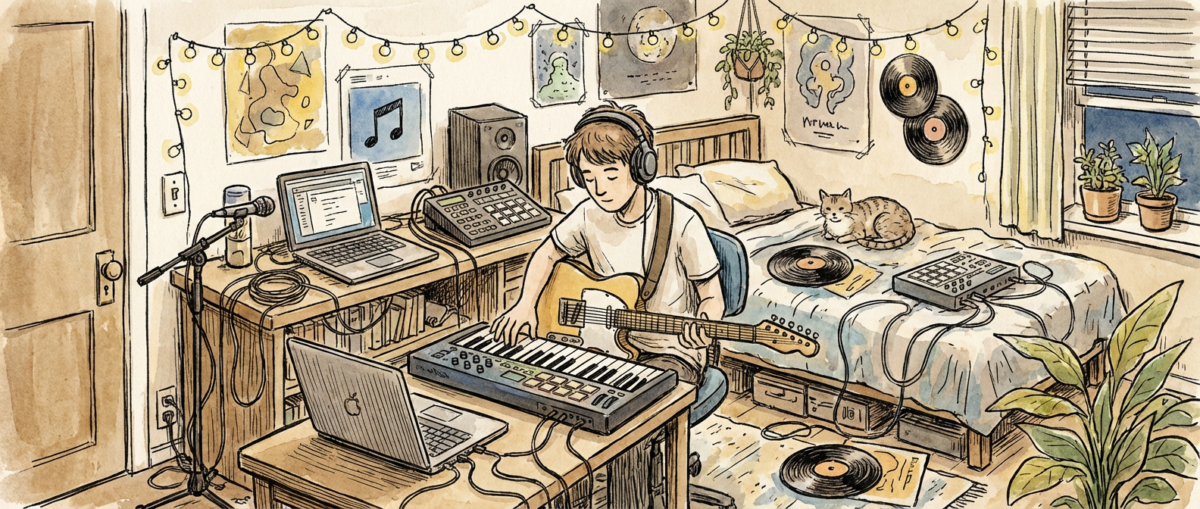
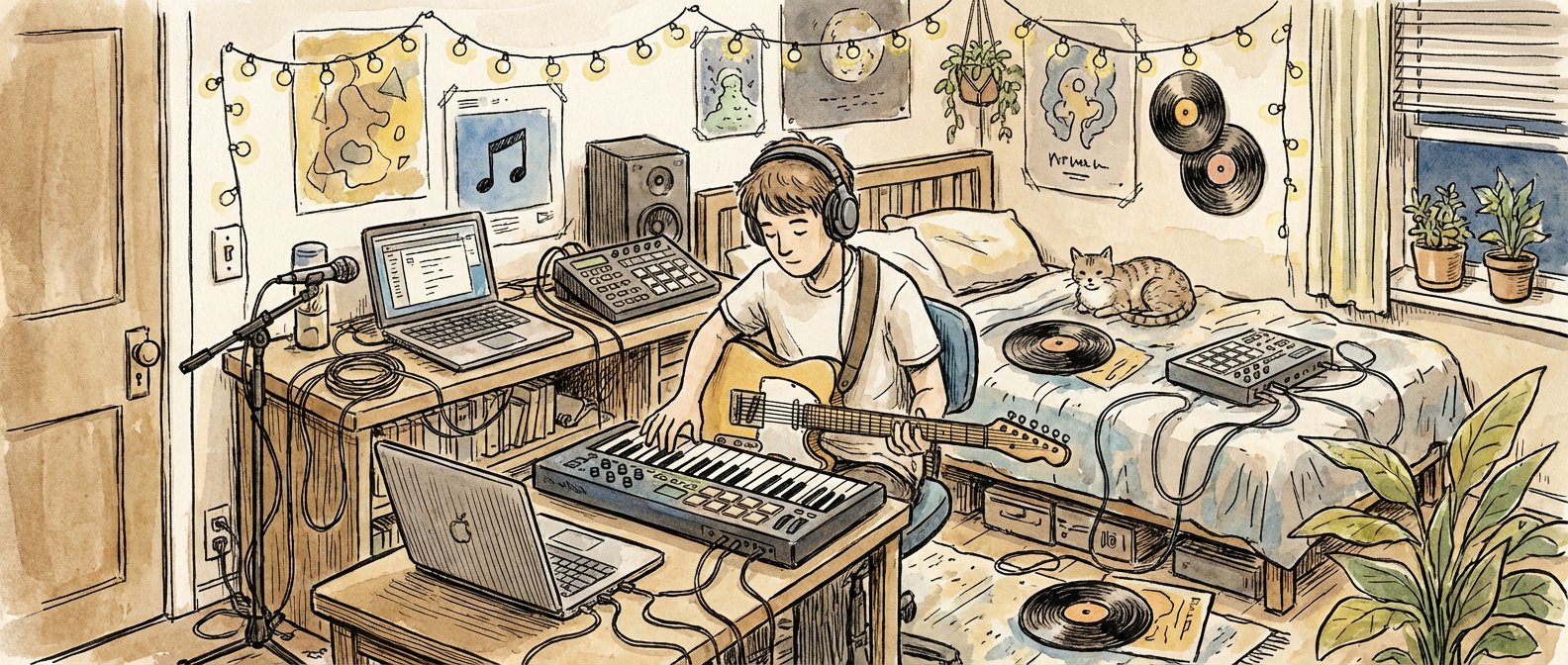
Walk through any apartment building in Brooklyn, Austin, or Los Angeles on a weeknight, and you’ll hear it. The muffled thump of a kick drum programmed at 2 AM. The gentle strum of a guitar processed through vintage reverb plugins. The whispered vocals layered over lo-fi beats that will, by morning, become another entry in the endless stream of bedroom pop flooding streaming platforms. This is the sound of a cultural shift that has completely changed how music gets made, distributed, and consumed.

The Bedroom Revolution: How DIY Production Is Reshaping Music's Cultural Landscape
The Bedroom Revolution: How DIY Production Is Reshaping Music’s Cultural Landscape

The numbers tell the story with stark clarity. Three-quarters of all music uploaded to Spotify this year came from home recording setups rather than professional studios. This isn’t just a pandemic-era fluke that’s fading with time. It’s a permanent shift in how the music industry actually works. Digital Audio Workstations like Ableton Live, FL Studio, and Logic Pro have wiped out the financial barriers that once kept aspiring musicians away from professional-quality production tools. What used to require tens of thousands of dollars in equipment and studio rental fees now fits on a laptop that costs less than a single day in a high-end recording facility.

The change goes way deeper than just access to technology. These platforms have created entirely new approaches to composition and arrangement. Bedroom producers layer sounds with the patience of painters, building tracks over weeks or months rather than the compressed timeframes of traditional studio sessions. They sample their own field recordings, manipulate found sounds, and create textures that would have been impossible or ridiculously expensive just a decade ago.

Genre-Blending in Real Time

Bedroom pop has grown from a niche aesthetic into a legitimate commercial force. Artists working within this dreamy, nostalgic framework have consistently appeared on Billboard charts since 2019, proving that intimate, lo-fi production can compete with major-label releases. The genre’s influence spreads far beyond its original boundaries, seeping into indie rock, R&B, and even mainstream pop productions.

This success reflects broader changes in how audiences consume music. Streaming algorithms reward consistency over perfection, favoring artists who release regularly rather than those who disappear for years between polished albums. Bedroom producers, working from their personal spaces with immediate access to their tools, can respond to creative impulses in real time. They drop singles monthly, experiment with different sounds, and build followings through sustained engagement rather than expensive marketing campaigns.

The aesthetic itself has become a cultural reference point. The deliberately imperfect production, the dreamy reverb, the nostalgic chord progressions—all of this speaks to a generation seeking authenticity in an increasingly manufactured world. Pitchfork music criticism has documented this shift extensively, noting how bedroom pop’s DIY ethos resonates with listeners who value artistic independence over commercial polish.

The Sample Dilemma and AI Revolution

But this creative freedom operates within messy legal and technological constraints. Sample clearance costs continue to block independent artists from incorporating classic material into their work. A single uncleared sample can result in takedown notices, lost revenue, or expensive legal battles that small artists can’t afford to fight. This creates a two-tiered system where major labels can afford to clear samples while independent producers must either avoid sampling entirely or risk operating in legal gray areas.

Artificial intelligence has thrown new complications and opportunities into the mix. Stem separation tools powered by machine learning can isolate individual instruments from finished recordings with remarkable precision. Independent producers use these technologies to create unauthorized remixes and extract elements from copyrighted material. While this enables creative experimentation on an unprecedented scale, it also raises questions about intellectual property that the legal system hasn’t figured out how to handle yet.

The technology itself is neutral, but how people use it reveals the tensions within contemporary music culture. Some artists embrace AI as another tool in their creative arsenal, while others view it as a threat to human creativity. Sound on Sound production forums buzz with debates about the ethical implications of AI-assisted production techniques. These conversations will likely shape how the technology develops and how the industry regulates its use.

Physical Media’s Unexpected Comeback

Against this backdrop of digital innovation, physical media has made a surprising comeback. Vinyl sales have outpaced CD purchases for three consecutive years, with 2025 marking the strongest performance yet for the format. This trend reflects more than mere nostalgia. Vinyl represents tangible connection in an increasingly intangible musical world.

Bedroom pop artists, in particular, have embraced vinyl as both an artistic medium and a revenue source. Limited-edition colored vinyl releases create scarcity and collectibility that streaming can’t replicate. The format’s inherent warmth complements the genre’s lo-fi aesthetic, while the large canvas of album artwork provides space for the visual elements that define bedroom pop’s dreamy, nostalgic brand.

Record stores have adapted to serve this new generation of vinyl enthusiasts. They stock bedroom pop releases alongside classic reissues, creating spaces where digital natives discover physical media for the first time. These shops work as cultural hubs where online communities gather in physical space, bridging the gap between digital creation and tangible experience.

The Future Sound

This transformation keeps accelerating. New tools emerge monthly, each lowering barriers further and enabling new forms of creative expression. Cloud-based collaboration platforms allow bedroom producers to work together across continents. Mobile apps bring professional-level production capabilities to smartphones. Virtual reality environments promise immersive composition experiences that could redefine what it means to make music in a bedroom.

The cultural implications stretch beyond music itself. This democratization of production tools has created a generation of artists who understand technology intimately, who view creative constraints as problems to solve rather than limitations to accept. They represent a shift from passive consumption to active creation, from waiting for industry gatekeepers to building their own platforms and audiences.

The bedroom pop movement reveals something important about contemporary creative culture: the desire for authenticity, the power of accessible technology, and the appeal of human connection through art. As these trends continue to evolve, they invite us all to consider what role we might play in shaping the sound of tomorrow.

Categories
Main

The Bedroom Revolution: How Home Studios Are Reshaping Music’s Creative Landscape

The New Sound of Independence

In the dim glow of laptop screens and the warm hum of budget audio interfaces, something interesting happens nightly across countless bedrooms worldwide. The barriers that once separated aspiring musicians from professional recording studios have crumbled, replaced by accessible digital audio workstations and affordable equipment. We’ve hit a real tipping point here: nearly three-quarters of all music uploaded to Spotify this year came from home recording setups. That’s a massive shift in how music gets made and distributed.

The democratization goes deeper than mere convenience. Artists who once needed thousands of dollars and studio time to realize their vision now craft detailed soundscapes with nothing more than a computer, headphones, and creativity. This accessibility has created entire movements, with bedroom pop leading the charge as both aesthetic and philosophy. The genre’s characteristic lo-fi warmth, dreamy textures, and intimate vocals aren’t accidents of limitation but deliberate choices that celebrate the imperfect beauty of home recording.

Software giants like Ableton Live, FL Studio, and Logic Pro have basically eliminated the economic barriers to entry in music production. These digital audio workstations offer professional-grade capabilities at consumer prices, putting symphony orchestras, vintage synthesizers, and cutting-edge effects processors at every bedroom producer’s fingertips. The learning curve remains, but the financial gatekeepers have vanished.

From Bedrooms to Billboards

What began as a niche aesthetic has become a commercially viable force within the music industry. Since 2019, bedroom pop has consistently produced artists who crack the Billboard charts, proving that intimate, home-recorded music can compete with major-label productions. Names like Clairo, Rex Orange County, and Boy Pablo have transformed from SoundCloud darlings into festival headliners, their success validating the commercial potential of the bedroom aesthetic.

This success challenges traditional industry assumptions about what professional sound quality actually is. Where major labels once demanded pristine recordings captured in expensive facilities, audiences now gravitate toward the warmth and authenticity that home recording naturally provides. The slight imperfections, the ambient room tone, the compressed dynamics become features rather than bugs. Pitchfork music criticism has increasingly championed these artists, recognizing their cultural significance beyond novelty.

The genre’s visual aesthetic mirrors its sonic approach. Album covers feature grainy film photography, soft pastels, and nostalgic imagery that speaks to a generation raised on Instagram filters and vintage camera apps. This cohesive artistic vision extends from the music itself to its presentation, creating immersive worlds that fans can inhabit both sonically and visually.

The Sample Dilemma and Creative Workarounds

Despite the creative freedom that home recording provides, legal obstacles persist in constraining artistic expression. Sample clearance costs continue to block independent artists from incorporating classic material into their work, creating a two-tiered system where major labels can afford to clear samples while bedroom producers must find alternative approaches. This limitation has sparked remarkable creativity, with artists developing sophisticated techniques for recreating the essence of classic recordings without directly sampling them.

The rise of artificial intelligence-powered stem separation tools has complicated this landscape further. These applications can isolate individual instruments from existing recordings with unprecedented accuracy, enabling unauthorized remixing and manipulation at unprecedented scale. While these tools democratize access to musical elements, they also raise complex questions about intellectual property and artistic integrity that the industry continues to grapple with.

Many bedroom pop artists have embraced these constraints as creative catalysts. Rather than sampling classic soul records, they recreate vintage keyboard tones using software synthesizers. Instead of lifting drum breaks, they program beats that evoke the feel of classic recordings while remaining entirely original. This approach has led to a distinctive sonic palette that honors musical history while forging new creative territory.

The Physical Renaissance

Here’s the weird part: as music production becomes increasingly digital, physical formats are experiencing unprecedented growth. Vinyl sales have outpaced compact disc sales for the third consecutive year, suggesting that listeners crave tangible connections to the music they love. This trend particularly benefits bedroom pop artists, whose aesthetic naturally aligns with vinyl’s warm, analog character.

Record pressing plants struggle to meet demand, with wait times extending months for independent releases. This scarcity has transformed vinyl into both collectible object and cultural statement. Bedroom pop releases often feature unique color variants, limited pressings, and elaborate packaging that transforms each record into an art piece. Sound on Sound production techniques increasingly focus on optimizing mixes for vinyl playback, acknowledging this format’s growing importance.

The vinyl revival intersects with streaming culture in fascinating ways. Artists release digital singles to build anticipation for physical releases, creating multiple touchpoints with their audience. Fans discover music through streaming platforms but express deeper connection through vinyl purchases, suggesting that digital and physical formats work together rather than compete.

Looking Forward

The bedroom pop movement is more than a musical trend. It represents a fundamental shift toward artistic independence and authentic expression. As technology continues evolving, the gap between bedroom producers and major-label artists will likely continue shrinking. New tools for spatial audio, AI-assisted composition, and immersive listening experiences promise to further expand creative possibilities for home-based artists.

This transformation raises intriguing questions about the future of musical authenticity and commercial success. If anyone can create professional-sounding music from their bedroom, what distinguishes exceptional artistry from mere technical competence? The answer seems to lie not in equipment or budget but in vision, emotion, and the ability to connect with listeners on a deeply personal level.

The bedroom studio revolution continues unfolding in real time, shaped by every late-night recording session and every artist brave enough to share their most intimate musical thoughts with the world. What stories are being written in bedrooms tonight, and how will they reshape tomorrow’s musical landscape?

Categories
Main

Dollardestruction

Dollardestruction

Art, culture, and the conversations that matter.

We think culture writing should be as bold as the work it covers. Our critics and contributors write about music, visual art, film, and performance with the care and attention these forms deserve. Sometimes that means celebrating work that pushes boundaries. Other times it means asking tough questions about art that everyone else is praising.

Topics we cover: Visual Art · Music · Film & TV · Performance · Photography · Criticism

Categories
Main

Quantum-Safe Banking: The Fortress Built for a Quantum Dawn

Fellow coders and quantum dreamers, imagine a bank vault fortified by algorithms so advanced they make the T-Rex of cyber threats look like a fluffy kitten wrestling with a ball of yarn. This isn’t science fiction or a scene from a cypherpunk’s dream, but our actual reality as quantum computing gets closer to being practical. We’re on the edge of a massive shift in financial security, and the changes will reshape how banking works.

The Quantum Quake

First, let’s talk about the elephant in the room. Quantum computing is still young, but it’s heading toward outperforming classical computers at cracking complex problems, including encryption we currently think is unbreakable. Banks and financial institutions rely heavily on cryptographic encryption to protect their assets. Picture your surprise when quantum algorithms like Shor’s and Grover’s tear through these defenses in seconds instead of thousands of years.

Our current public-key infrastructure (PKI) that powers secure transactions, digital signatures, and Identity-As-A-Service solutions depends on traditional encryption. Once quantum computers hit their stride, these cryptographic locks become paperback novels that quantum processors can flip through. It’s not about “if” anymore, it’s about “when.”

Policy and Paranoia

This excitement shouldn’t be limited to the tech elite. It’s also keeping policymakers up at night. Governments are finally waking up to this approaching reality. The National Institute of Standards and Technology (NIST) is already working on new quantum-resistant algorithms. Meanwhile, projects like the European Quantum Communication Infrastructure show how seriously we’re preparing for the next chapter of the internet.

The global race for quantum dominance reads like an espionage novel. China, the US, and the EU are dumping billions into quantum research, not just for the tech benefits but for the implications in defense, national security, and finance. As this quantum frontier approaches fast, both established financial institutions and fintech startups need to help guide the direction before we get hit by a quantum hurricane.

From Labs to Ledgers

Here’s where the nuts and bolts come into play. Moving from traditional to quantum-safe algorithms isn’t a code refactor we can push out over a weekend. It’s a complete overhaul of the digital infrastructure that supports our modern economy.

Enter Post-Quantum Cryptography (PQC). This isn’t just another software update. It’s next-generation encryption designed to bridge the gap between our current world and the post-quantum era. NIST’s emerging PQC standards are like a well-tailored suit, secure and fitted properly.

But creating and deploying PQC requires massive coordination among financial service providers, all under regulatory oversight that spans continents. The software library rewrites and network infrastructure overhauls needed for integration are huge. Think grand orchestra, not garage band.

Innovation Opportunities

While the path to quantum safety looks intimidating, it’s also opening doors for innovation. Startups are practically salivating at the chance to become fintech legends. Quantum-resistant protocols, decentralized designs, and trustless systems using blockchain technology are still rough sketches of what this new era could look like.

Early adopters testing these initiatives are shaping what the future-ready bank will be. A bank that doesn’t just survive quantum computing but uses it as a competitive advantage. Innovators are building products that balance privacy with transparency, something that used to seem impossible. Take privacy-preserving protocols that could make quantum-safe banking work smoothly while keeping customer data secure.

The Edge of the Bank Vault

Here’s the core truth: we need a new breed of financial infrastructure that gets buy-in across politics, technology, and economics. Institutions need cross-training where coders learn policy language, regulators understand tech, and stakeholders at every level join the conversation as active participants.

We don’t just adapt to quantum computing because we have to. We become architects of a system that thinks about long-term cultural implications. If quantum safety is where we’re headed, then what we do now determines how we get there.

Provocation or Prophecy?

I’d love to end with a challenge: How do you see your startup or organization fitting into this quantum evolution? Are you ready to help build the bank vault, or do you see yourself as the one holding the key to this new future? Your thoughts could be the spark that lights a quantum fire.

Drop your thoughts below. Let’s build this fortress together. 🏗️🔐

Categories
Main

The Quantum Turn: Navigating the Coming Revolution in Finance

Good morning, tech dreamers and fintech builders! Today, we’re diving headfirst into a topic that could change how finance works: quantum-safe banking. Yeah, I know it sounds like something pulled right out of a science fiction novel, but trust me, it’s as real as crypto winters and stock market jitters.

Quantum computing is knocking on the door of our financial institutions, and that knock is getting louder. It’s not just some far-off theory waiting in dusty academic journals, but a real force ready to shake up how financial services work. But before you all rush off to replace your current systems with quantum ones, let’s break down what the future holds and what we need to prepare for.

The Quantum Computing Boom

Quantum computers are like the cool new kids in town that everyone wants to befriend, but few really understand. They promise to perform computations that would take classical computers millennia to solve in a matter of seconds. For the financial world, this means potential game-changers for risk assessment, complex financial modeling, and cryptographic systems.

We’ve already seen governmental and corporate giants (think Google, IBM, and even China) investing heavily in quantum research. However, it’s more than just a nerdy arms race. It’s about securing the future of data in an era of unprecedented computational power.

Tech vs. Policy: The Great Debate

As we steer toward a quantum future, the steps are anything but straightforward. With great power comes, well, great regulatory headache.

Governments are moving at their usual pace: slow and cautious. The debate gets bogged down in concerns about data security, privacy, and the chilling potential for quantum decryption methods to crack existing cryptographic algorithms that secure everything from your grandma’s email password to trillion-dollar financial exchanges.

In the U.S., there’s obvious push and pull. On one hand, there’s an urgent need to lead in quantum because whoever cracks quantum supremacy first could basically have the “God mode” on cyber warfare and finance. On the other hand, the Department of Commerce and National Institute of Standards and Technology (NIST) are treading carefully, brewing policies that try to walk a tightrope between encouraging innovation and managing risks.

Financial Institutions: Prepare or Perish

Let’s be honest: banks and other financial institutions aren’t exactly known for being early adopters. I mean, have you seen the legacy systems some are working with? But quantum computing’s promise (or threat, depending on how you look at it) is forcing the hand of even the most dinosaur-like banks to start evaluating their stances on tech evolution.

Many are creating internal task forces or partnering with tech firms that specialize in quantum computing. Some are exploring hybrid models where quantum and classical machines work together—sort of a training wheels approach to quantum adaptation. Regulatory frameworks are demanding risk management strategies, and financial institutions are getting nudged to conduct periodic quantum impact assessments.

Market Structure: The Subtle Genome Edit

With quantum’s arrival comes a predicted massive shift in market structures. Predictive trading models could reach new heights of accuracy, asset management could rise to unprecedented levels of personalization and complexity, and potentially, quantum-based algorithms could rewrite the rules of high-frequency trading.

While this sounds exhilarating, consider the implications. Market volatility might increase initially as old algorithms clash with new quantum-enhanced versions. Smaller players or countries might struggle to compete unless they get onboard quickly. It’s Darwinian, it’s ruthless, but also incredibly exciting.

The Cryptography Quandary

A horror story bedtime tale for any coder is the coming doom of current cryptography standards. Modern encryption could become obsolete almost overnight once a fully operational quantum computer becomes standard.

The need is clear: the world needs quantum-resistant encryption algorithms. Researchers globally are working flat out to make financial systems future-proof, but the clock is ticking, and no one really knows exactly how much time we have left.

NIST has already begun rounds of call-outs for quantum-resistant cryptography submissions, encouraging different types of solutions. Financial stability hangs precariously on the roll-out of these next-gen cryptographic systems well before the quantum computing Rubicon gets crossed.

Takeaway: Ready for Quantum-As-A-Service?

So here’s where I throw the ball into your court. Quantum-safe banking isn’t just science fiction melodrama anymore. It’s a real, looming challenge that requires not just readiness, but proactive planning for the future. As the lines between tech and policy blur, our traditional views of finance are being challenged, and quantum might just upend everything we thought we knew.

Will quantum-safe banking be the cure-all that strengthens financial systems against cyber threats of tomorrow, or is it the opening of Pandora’s box with innovations that could outpace our ability to control them? What do you think? Let’s get into that juicy debate below. Ready, set, code!

Categories
Main

Quantum-Safe Banking: Future-Proofing Finance in the Age of Supercomputers

You know you’re alive in interesting times when your morning brew is inspired by quantum mechanics. No, I’m not talking about Schrödinger’s coffee, but I am suggesting it’s time we sip the liquid reality of quantum computing, especially as it challenges the very fabric (or should I say code) of our beloved financial structures. Yes, amigos, today I’m diving into quantum-safe banking.

Sure, it’s tempting to brush off quantum stuff as nerdy sci-fi fodder, but doing so is like ignoring Y2K in 1999. Reckless and woefully irresponsible. Banks, fintech innovators, and coders like us need to stay two steps ahead with solutions that can handle quantum threats. Let’s get under the hood.

The Quantum Menace: How Supercomputers Make the System Nervous

Let’s cut right to the chase. You’ve heard of qubits, right? These little quantum bits are like the superheroes of the computing world, capable of existing in multiple states at once. This makes quantum computers extraordinarily powerful, capable of solving complex problems faster than you can say “blockchain badabing.”

Now the conundrum: classical encryption methods, like RSA and ECC, are the Fort Knoxes of digital security until they meet quantum computers. These systems could eventually chew through our current encryption like termites through balsa wood. Experts suggest that it’s not a matter of if, but when. And honestly? That keeps me up at night sometimes.

Banking on Safety: Stepping up to Quantum-Safe Solutions

Rather than look like Captain Hindsight later, financial institutions need to future-proof their digital safety measures now. Enter the knight in shining armor: post-quantum cryptography. These are special algorithms designed to resist quantum attacks.

Various banks and tech firms are trialing quantum-resistant technologies, loaded with lattice-based cryptography and hash-based signatures. Financial startups have a golden opportunity here. Imagine being the fintech that didn’t just ride this quantum wave but became its beacon.

The Geopolitical Quagmire: Who Leads the Quantum Race?

While we’re mapping out quantum-safe roadmaps, let’s not ignore the massive geopolitical jigsaw playing in the background. Countries are bustling like it’s an arms race. Both east and west are gunning for quantum supremacy like it’s a 21st-century space race.

So, why does this matter to us in the fintech sector? Well, the regulatory landscape is shifting constantly. As nations protect their quantum capabilities, we’re sure to face a mess of international laws and standards. For unicorn builders especially, it makes sense to integrate quantum-safe practices now, rather than deal with the red tape later.

Market Structures Reinvented: The Quantum Leap

Listen, let’s think about the market implications. Quantum computing won’t just poke holes in encryption. It will redraft the playbook entirely. Think about ultra-complex financial models and risk assessments taking mere minutes instead of weeks. New quantum-inspired trading algorithms will flip some traditional paradigms on their head.

Financial products will shift. Quantum resilience might become a selling point. What excites me as a builder is how quantum could redefine asset management, processing billions of transactions in real time, adding layers of analytical precision previously thought impossible.

My Humble Takeaway: Be the Quantum-Safe Pioneer

Quantum-safe banking is new territory, a land ripe for innovation. As builders, we should jump at this chance to innovate and lead. Those standing idle today may struggle tomorrow, while the proactive build bridges across disruptions.

But here’s my honest plea: Before jumping on this hyped train, no matter how fast it’s moving, let’s rigorously test these technologies, work with ethical standards in mind, and draft policies that consider the global whole. I’ve seen too many rushed implementations blow up spectacularly.

Have We Met Our Match, or Can We Build Bridges?

I’ve thrown some quantum thoughts your way, so let me ask: Do you see quantum-safe tech as an opportunity, a threat, or simply Sci-fi mumbo jumbo? How do you see these shifts playing out in financial regulation and innovation? Join the conversation because as builders, our voices matter. Let’s innovate together before quantum jumps up and surprises us all.

Categories
Main

The Quantum-Safe Banking Revolution: Are You Ready for the Post-Quantum Era?

Welcome, my fellow code-slingers and fintech aficionados, to a time not too far from now, a world where quantum computers don’t just foreshadow the future; they redefine it. In this post, let’s explore quantum-safe banking and how we’re going to protect our digital fortunes from being cracked open like cheap beachside coconuts.

The Quantum Threat: A Brief Overview

Alright, picture this: your beautiful, meticulously architected blockchain walks into a virtual bar, confident in its cryptographic armor. Enter a quantum computer, the suave digital ninja, who whispers to a discreet observer, “Yeah, I can factorize those RSA keys over lunch.” This could be closer than we think, thanks to spooky action at a distance and exponential parallel processing. When fully realized, quantum computers could unravel today’s encryption methods faster than you can say “superposition.”

For financial institutions, this isn’t just a hypothetical headache; it’s a regulatory tornado waiting to flatten the industry with its blurred lines of algorithmic doom. We’re on the cusp of not just new tech, but a brand-new rulebook for what ‘secure’ means.

Post-Quantum Cryptography: The New Armor

Now, I’m all for an elegant solution, fintechs designing complex, string-theory-level UIs that look beautiful but don’t solve any problem at scale. Luckily, post-quantum cryptography (PQC) is slightly more practical. It’s the Houdini of cryptographic methods, ready to step in front of our data and yell at any quantum aggressor, “You shall not pass!”

PQC involves developing algorithms that can resist quantum attacks, providing the fortification needed to keep our cryptographic keys safe from future threats. Government agencies and private enterprises are investing heavily in this field, like belt and suspenders on highly caffeinated engineers.

Regulatory Challenges and Potholes

Usually, the words “regulation” and “innovation” mix as well as oil and water. Yet, when it comes to quantum-safe measures, they’re about to share more intimacy than variables in a cramped code block. Regulators worldwide are starting to flex their muscles, defining standards and compliance requirements aimed at a quantum-ready infrastructure. Banks, fintechs, and all shades of financial institutions must begin aligning with these protocols if they’re to avoid being caught with their loop optimizations down when quantum supremacy arrives.

From the U.S. National Institute of Standards and Technology (NIST) to the European Union’s Quantum Technologies Flagship program, global efforts are starting to blueprint a policy framework that views PQC as the firewall of the soon-to-be quantum era.

Incentives and Economic Implications

No industry transformation is complete without the occasional carrot dangled in front of a donkey-hungry market player. We’re beginning to see financial incentives introduced by forward-thinking governments to promote the adoption of post-quantum tech. Grants, tax benefits, and public-private partnerships are encouraging innovation, creating a petri dish where startups can rapidly develop solutions for quantum resilience.

Brace yourself for a wave of mergers, acquisitions, and a hotbed of R&D as companies race to stake their claim in this newborn quantum ecosystem. Think of it like the early days of the Internet but with the stakes dialed up to eleven and everyone wearing augmented reality glasses.

The Geopolitical Chessboard

On the global stage, these quantum developments are intersecting with national interests faster than error messages populate debug logs. States aspiring to digital sovereignty see quantum computing as a frontier for demonstrating technological superiority, like landing on the moon, but the moon is your encrypted digital life.

Countries are racing to develop quantum capabilities, not just for the power of decryption but as tools for national security, energy efficiency, and unsurprisingly, new forms of economic espionage. But hey, at least there’ll be cool sci-fi movies about all this someday.

Bridging the Gap: A Call to Action

To my fellow builders who code late into the night, pack your IDEs with post-quantum tools and start integrating them into your legacy systems. It’s time to test, iterate, and prepare for the inflection point. When the quantum rebellion comes, will your code be the one standing tall, or will it end up as a cautionary tale featured in an obscure Reddit thread?

A Provocative Takeaway

So there you have it: a future narrative threaded with cryptographic intrigue and quantum suspense. Embrace the post-quantum era, or risk being the fintech dinosaurs watching the asteroid approach through the cloud-driven sky.

Here’s a parting question: Are we fully considering the true cost and implications of being late to the quantum-safe party, not just financially but in terms of trust and digital sovereignty? Let’s ignite the comment section!