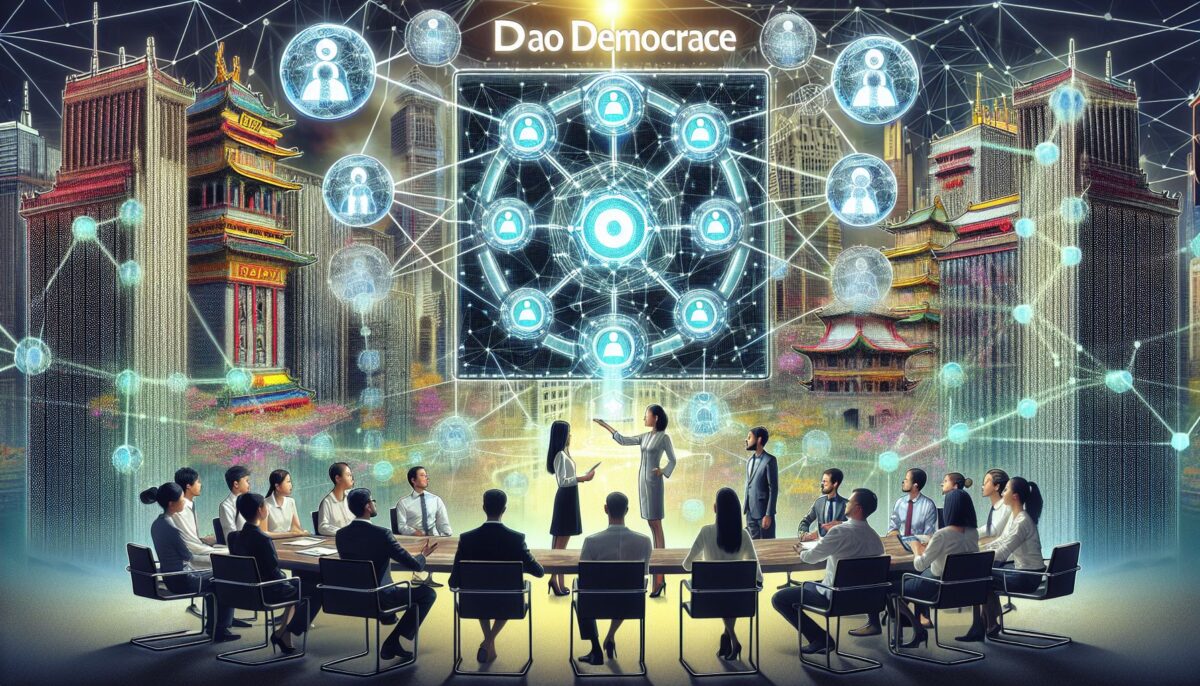
Good morning, innovators, dreamers, and crypto-anarchists! Have you ever dreamed of a world where financial governance is as democratic and transparent as a town hall meeting that runs on blockchain? A world where power isn’t just taken out of dinosaur boardrooms but shared amongst everyday coders and visionaries? Welcome to the thrilling intersection of blockchain governance and decentralized autonomous organizations (DAOs), where guardian nodes guide the financial ships of tomorrow.
The Dawn of Decentralization
We’re at the cusp of something special, folks. It’s like watching the first electric currents snake along copper wires or glimpsing a pixelated Pong ball dance across screens. The power of decentralized finance is charging through the wires, ready to transform financial structures entrenched for centuries. And here we are, with ringside seats, or better yet, laptops open and fingers flying across keyboards as we co-create this brave new world.
Decentralization is more than simply spreading power. It’s about adjusting our aim from shareholder supremacy to community stewardship. And at the heart of this revolution are DAOs, those democratically governed entities that operate on smart contracts as nifty as a Swiss army knife.
Guardian Nodes: The Modern-Day Ben Franklins
Enter the guardian nodes. Imagine them as the Ben Franklins of DAOs, lightning rods charged to guide decision-making with integrity and transparency. These nodes have the important job of safeguarding protocol governance, ensuring that proposals pass muster and align with the community’s collective interests (think of them as bouncers with a library card).
But our guardians must dance between empowering change and maintaining stability. Overreliance could ignite the same concentrated power structures we’ve cried mutiny against, so decentralizing these entities is as important as building trust in them.
The Right Incentives: Tokens and Trust
What motivates our cryptographic Ben Franklins? Tokens, of course! But incentives must weave into the fabric of good behavior. Ill-constructed incentives are like handing out candy to keep kids patient. They might swallow the sugary bribe, but you’ll pay later during the sugar crash.
Design incentives that promote long-term engagement and responsible governance. You don’t want a wild west where short-term profit trumps the sustainability that preserves the system’s integrity. A carefully curated blend of service fees, staking rewards, and new-age financial instruments can quell the shouts of “Show me the money!” in favor of whispers of “Show me the value.”
Challenges and the Regulatory Roller Coaster
No revolution worth its salt unfolds without resistance. DAOs disrupt existing financial entities and stretch the limits of regulatory frameworks crafted by lawmakers who’ve only begun decoding crypto.
Regulation may either find you sitting in a costly legal labyrinth or navigating policies that can either uplift or snuff out innovation faster than you can say “ICO.” DAOs straddle borders effortlessly. They’re digital entities that make operations across time zones and continents look as easy as flipping through channels on a lazy Sunday.
Stay nimble, friends. Embrace regulation as both shepherd and provocateur, balancing compliance with creativity, and never lose sight of the human at the heart of every system you design.
The Global Impact: Financial Democracy Unleashed
Imagine unleashing this wave not just upon Silicon Valley, but across the African savannah, through bustling Asian metropolises, and into secluded Pacific islands. Guardian nodes and DAOs have the potential to level the playing field, introducing financial democracy to those previously condemned to the sidelines of capitalistic games.
These entities are poised to write new financial allegories, paving paths where the unbanked become stakeholders, and where developers aren’t mere square pegs in round corporate holes but principal architects of financial futures.
Are You Ready to Code the Future?
So, my fellow builders, the question is clear: Do we have the audacity, the imagination, and the keyboards ready to manifest this decentralized dreamscape? Are we prepared to examine every line, get caffeinated with curiosity, and collaborate towards a governance model that errs on the side of humanity and possibility?
I’ll leave you with a thought to nibble on with your coding snacks: In a world where power resides with those who dare to innovate, how do we ensure that this power remains a beacon for good and not a torch for hubris?
As always, your thoughts matter here. Fire away in the comments. Let’s reinvent the wheel together, one node at a time.