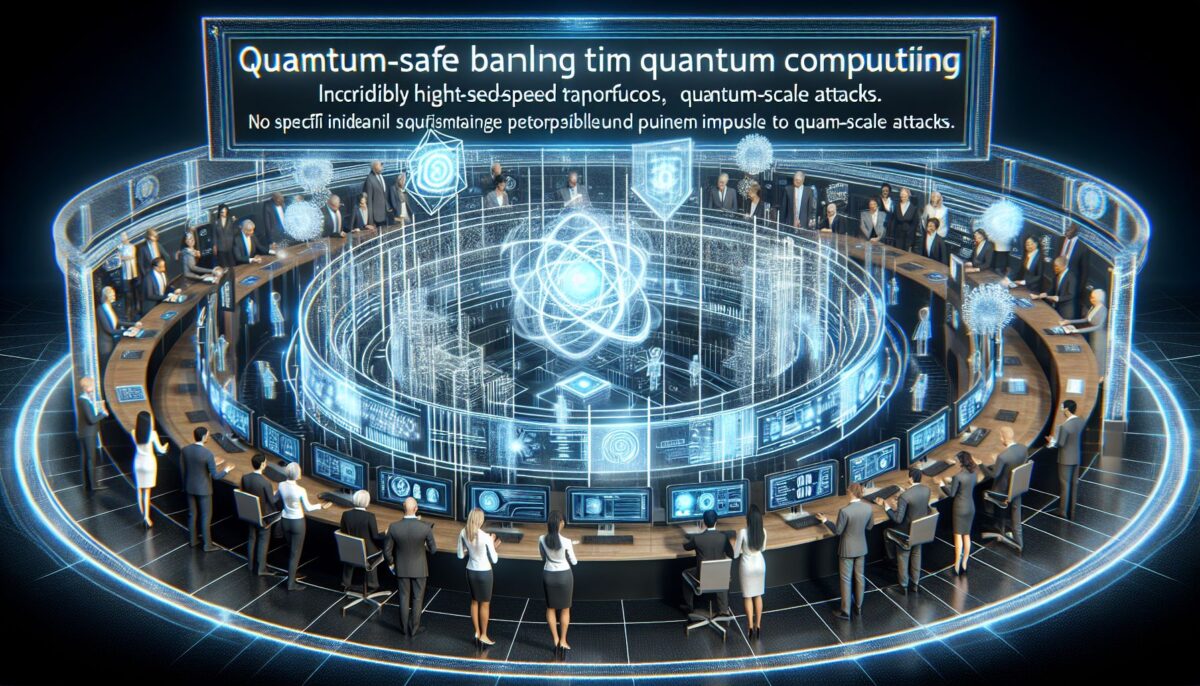
Good morning, fellow builders and boundary-pushers! Today, we’re diving into a world where Schrödinger’s cat thinks about asset liquidity, and cyber risks tango with quantum computers. That’s right: we’re unpacking the vault of quantum-safe banking—your next Figma project, and perhaps the plot twist we’ve been waiting for in our digital finance Netflix series.
The Quantum Computing Tsunami: What, When, and How?
Let’s set the stage by addressing the curly-haired elephant in the room: quantum computing. Imagine the computing power of a classic, silicon-based computer as a rusty old tricycle. Now, think of a quantum computer as a supersonic jet where bits are qubits, capable of being in multiple states simultaneously.
While nobody knows exactly when quantum supremacy will hit our financial systems, experts think we’re within 5–10 years of commercially viable quantum computers. That’s basically tomorrow in fintech years. And when it arrives, quantum computing could break existing cryptographic systems like a toddler with a LEGO set, creating vulnerabilities in everything from your grandma’s online banking login to national security databases.
Quantifying the Threat: Breaking the Bank(y) Vaults
Here’s the kicker: the cryptographic protocols we trust today (namely RSA and ECC) are about as fragile as a server held together with duct tape when faced with quantum computing. Against quantum power, these classical algorithms could be reduced to gibberish, unraveling the complex encryption we rely on in our daily financial transactions.
Just imagine all those encrypted transactions, secure messaging, and even blockchain networks suddenly naked to prying quantum eyes. It’s like leaving the vault door open with “Please don’t enter” in neon lights. This reality forces a complete rethink of how we define “safe” in our digital banking infrastructure.
The Quest for Quantum Resistance: The New Arms Race
So, what does quantum-safe banking look like, and how do we secure a vault that Schrödinger and his feline friend can’t break into? Enter the National Institute of Standards and Technology (NIST). These cryptographic wizards are working overtime in a global race to establish new quantum-resistant algorithms. Picture the Olympics of cryptography, except with fewer doping scandals and more algorithm benchmarking.
Quantum-safe cryptographic methods, like lattice-based and hash-based encryption, promise a resilient future. They give us patterns designed to stay two steps ahead of quantum’s mighty huff and puff. But implementing these changes isn’t just flipping a switch. It requires a complete overhaul of systems—the digital equivalent of renovating a house while living in it.
Parting the Geopolitical Clouds: PDQs and International Strategies
The quantum threat isn’t just an isolated storm cloud. It’s a geopolitical tempest. Governments are now racing to outperform each other in the sphere of PDQs (Post-Quantum Defense strategies), each trying to write the playbook on quantum-safe systems first.
The European Union, for instance, is leading initiatives like the European Quantum Communication Infrastructure (EuroQCI), working to maximize secure quantum communications across member states. Meanwhile, across the pond, Uncle Sam is also ramping up investments, hoping to roll out quantum-resistant infrastructure nationwide alongside the private sector.
The implications for fintech are vast. Regulatory frameworks are dancing the quantum fandango with international diplomacy, while financial institutions hold emergency boardroom sessions on what this means for security protocols and risk assessment.
Riding the Quantum Wave: Builder’s Blueprint to Future-Proofing
So, what’s a fintech builder in the age of quantum uncertainty to do? For starters, stay informed, stay nimble. It’s time to rethink our security strategies, invest in PDQs, conduct open-source collaborations, and pilot quantum-safe protocols. Get comfortable with cryptography’s brave new algorithms, and don’t be surprised when quantum strategies sneak into your sprint planning.
Testing these waters doesn’t just secure your systems—it gives you a leg up in the impending quantum economy. Preparing for quantum is like wielding a double-edged sword: sharp enough to fight off threats, and innovative enough to transform your digital toolbox into something legendary.
Wrapping It Up: Quantum Paranoia or Pragmatism?
As we stand on the quantum precipice, one thing is clear: the tides of computing are shifting, and with them, the entire world of finance and security. Quantum-safe banking isn’t just your weekly existential crisis—it’s a call to action that demands foresight and creativity.
How are you gearing up for the quantum revolution, and what role do you think policy should play in this brave new world? Let’s discuss in the comments below.