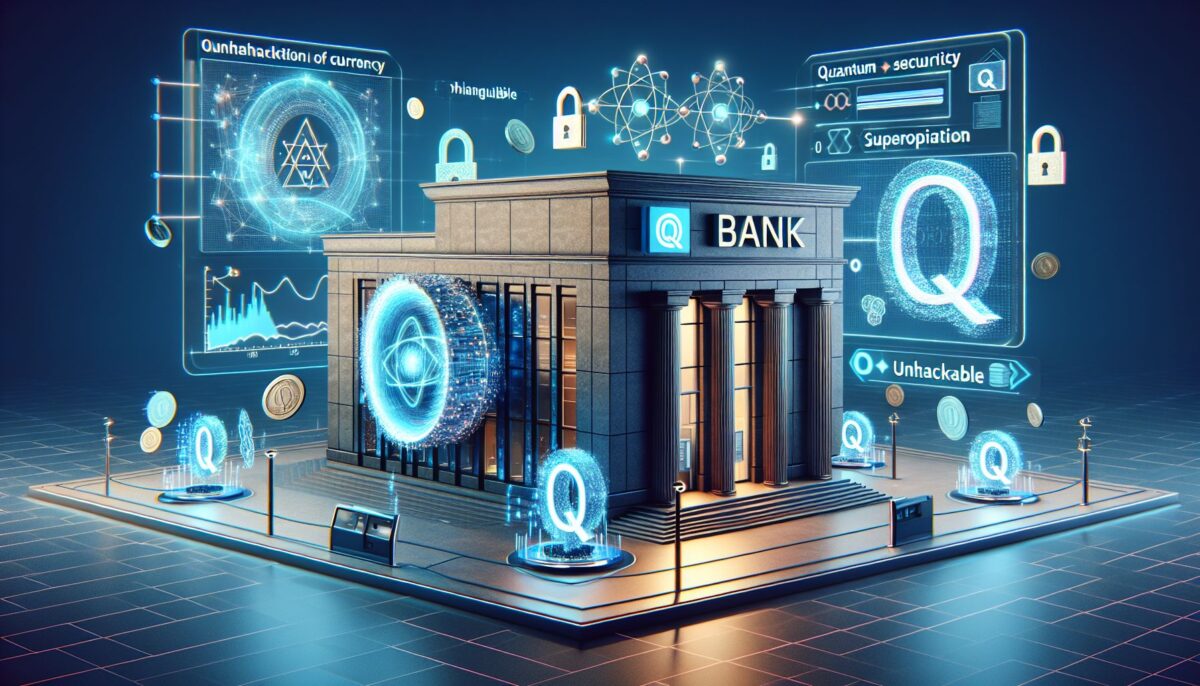
Good morning, fellow pioneers at the bleeding edge of fintech! As I sipped my coffee this morning, I found myself thinking about the delicate dance we do, balancing cutting-edge tech with the robust security necessary to protect people’s hard-earned money. Quantum computing is getting scary good, and that spells big changes for cybersecurity, especially when it comes to protecting financial systems. Last night’s dream of supervillain quantum hackers might have been just a fantasy, but it’s clear we need to gear up for a brave new world of quantum-safe banking.
The Computer That Split The Digital Atom
First, let’s talk quantum computers—those bad boys can do math that makes today’s supercomputers look like they’re stuck counting on their fingers. They completely change how we think about computational power. Using quantum mechanics principles like superposition and entanglement, quantum computers can perform calculations at speeds that would blow your mind compared to regular computers. You could say they split the digital atom, and now we’re dealing with the nuclear fallout—cue visual of finance dinosaurs running from a virtual explosion.
Enter the villain of our story: quantum hackers. Financiers like us love our encryption; it’s what keeps your peanut butter money transfer from becoming an accidental jelly donation. But here’s the thing—the algorithms protecting today’s transactions are sitting ducks for tomorrow’s quantum processors. It’s the cybersecurity equivalent of bringing a knife to a laser gun fight. All those scary sci-fi scenarios about futuristic hacking? They might actually happen once quantum computing meets financial systems if we don’t get our act together.
The Regulatory Labyrinth: Turning Tech into a Security Asset
Let’s wander into the labyrinth of regulations. Quantum-safe banking means we need to completely overhaul our legal and regulatory frameworks. Right now, our IT infrastructure and legal norms are built for classical computing’s safety challenges. But just like you can’t fit a qubit into a bit-shaped hole, existing regulations aren’t ready for quantum threats.
For those interested in policy dynamics (I see you, budding C-suite execs), this shift requires global coordination. Think of it as a complex dance number—regulations are our choreography and quantum threats are the constantly changing music tempo. We need international treaties and regulatory bodies working together to avoid a fintech version of “So You Think You Can Survive A Cyber Apocalypse?”
Risky Business: Not Just Calculated, but Quantumly Computed
It’s not all doom and gloom; there are exciting innovations here. Quantum-safe cryptography uses math that even quantum computers find tough to crack. Allow me to nerd out for a moment: methods like lattice-based cryptography and multivariate polynomials create problems that even these computational monsters find challenging.
No quantum-safe strategy is complete without thinking about market dynamics. Financial firms adopting these new security measures will set themselves apart, maybe offering premium services for security-conscious clients. Who wouldn’t pay a little extra for “Unhackable Banking: Now with Quantum Flavor”?
Partnering with Geopolitical Powers: Crafting Alliances or Arming Enemies?
Remember, today’s quantum breakthrough becomes tomorrow’s geopolitical chess piece. Imagine if the first nation to master quantum computing decides to flex its newfound muscles. Are they benevolent innovators or crypto-tyrants? As builders, we have to ask ourselves: How can we ethically shape the conversation between governments and financial institutions on the frontier?
Quantum-safe banking brings both the promise of financial indestructibility and the risk of deeper inequality among nations. It’s our job to make sure our software doesn’t become the arsenal for the first true Infowar.
Devs Just Wanna Have Fun: Implementing the Flexible Quantum Layer
Finally, let’s talk about how we, the builders, mess around with this stuff. Developing a quantum-safe strategy is like laying tracks while the quantum train barrels full steam ahead behind us. But the devs among us will find that many foundational strategies are already underway.
Given how much computational power these new algorithms need, experimentation and implementation create a delightful, albeit steep, Mountain Dew-fueled challenge. It’s like code-juggling; the possibilities are endless, making it an exciting yet intimidating leap forward.
Your Move, Fellow Futurist
And there it is, our snapshot of the quantum-safe banking marketplace. This new world is both thrilling and slightly terrifying, kind of like that first time you let your kid drive your Tesla with autopilot engaged. Stay open, stay nimble, and constantly question: Are we protecting the future, or just dragging the past into a new dimension?
So here’s my question to you all: As we move into this quantum age, what’s your roadmap? Will you adopt early, wait it out, or form a resistance cell with like-minded skeptics? Let’s jam about our vision for a financially quantum-proof tomorrow in the comments below.