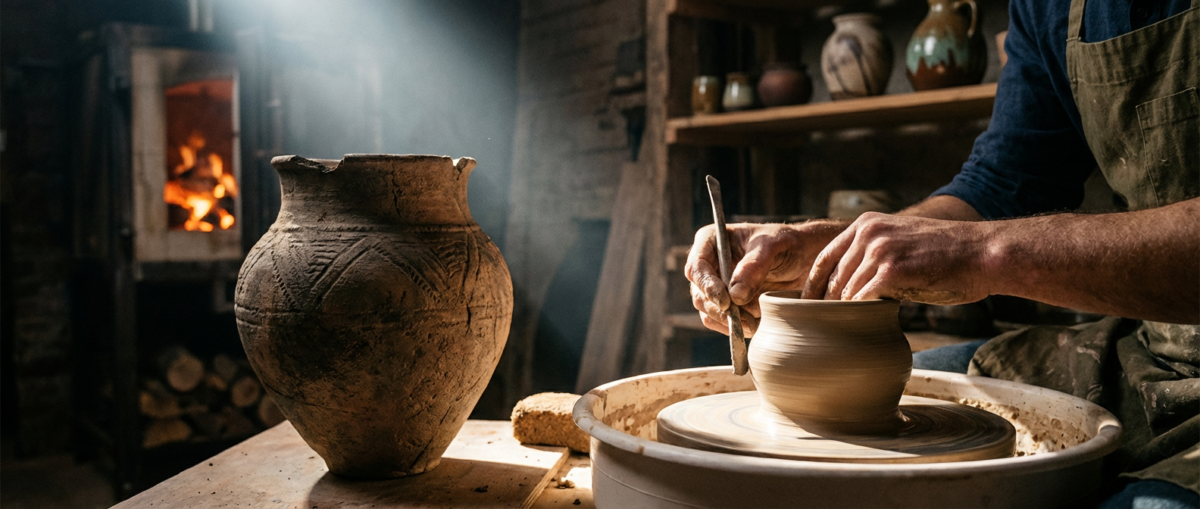
When Past Meets Present in the Potter’s Studio
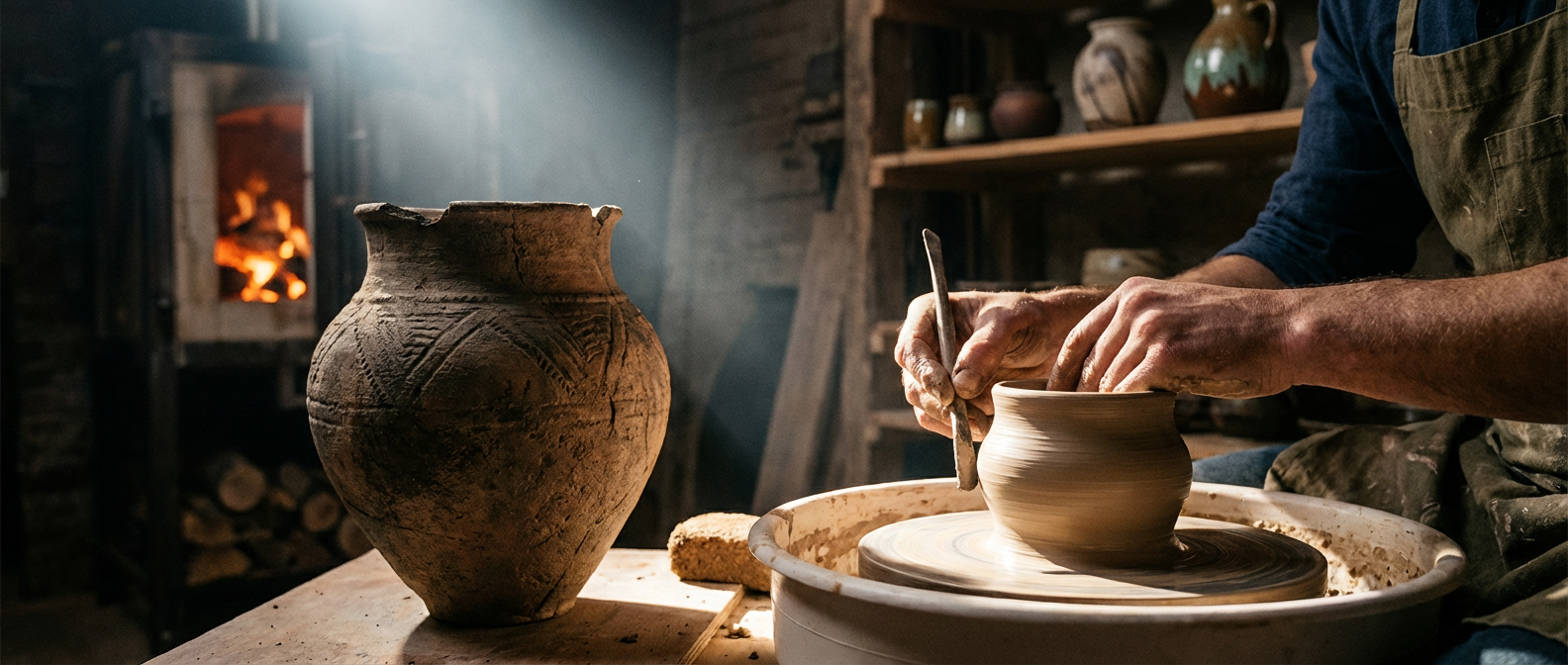
Walk into any contemporary ceramics studio today, and you’ll see something pretty amazing: artists reaching across thousands of years to use techniques that predate written language itself. The wheel spinning under their hands connects them directly to potters in ancient Mesopotamia, while the glazes they mix echo formulas first developed in Tang Dynasty China. This isn’t just nostalgia or romantic attachment to the past. Modern ceramicists get what art historians have long recognized—that the most interesting innovations often come from a deep conversation with tradition.
Take Ai Weiwei, who creates massive installations of deliberately broken Han Dynasty-style vases that say everything about cultural continuity and destruction. His technique draws directly from methods perfected over two millennia ago, yet his conceptual framework is completely contemporary. This combination shows how ancient ceramic techniques provide not just technical knowledge, but a rich vocabulary of cultural meaning that modern artists can manipulate, subvert, and celebrate.
The relationship between ancient and modern ceramics really shows itself in the workshop, where contemporary potters find themselves rediscovering principles that have remained unchanged since humans first shaped clay around fire. The basic physics of clay bodies, the chemistry of glazes, the behavior of kilns—these constants create an unbroken chain of knowledge that makes ceramics unique among the arts in maintaining direct technical continuity with its deepest historical roots.

The Resurrection of Raku and the Philosophy of Imperfection
No ancient technique has grabbed modern attention quite like raku, the 16th-century Japanese firing method that turns clay into something resembling controlled chaos. Originally developed for tea ceremony bowls, raku embraces the Japanese aesthetic principle of wabi-sabi—finding beauty in imperfection and impermanence. When contemporary ceramicist Paul Soldner reintroduced raku to Western artists in the 1960s, he wasn’t simply importing a technique. He was introducing an entirely different philosophy about how art should relate to chance, time, and the artist’s control.
Modern raku is quite different from its historical predecessor, yet the essential principle stays the same: pottery gets removed from the kiln while red-hot and subjected to rapid cooling that creates unpredictable crackling patterns and metallic lusters. Contemporary artists like Steven Hill and Rick Hirsch have pushed these boundaries further, developing hybrid techniques that combine raku principles with modern materials and firing methods. Their work shows how ancient techniques can launch entirely new artistic territories rather than just historical recreations.
What makes raku’s modern revival really interesting is how it challenges Western ideas of artistic control and perfection. Where European ceramic traditions emphasized technical mastery and predictable results, raku celebrates the marriage between human intention and natural forces beyond the artist’s control. This philosophical shift has influenced far more than just firing techniques. It has encouraged contemporary ceramicists to embrace experimentation, accident, and collaboration with their materials in ways that echo ancient beliefs about clay as a living substance.
Terra Sigillata and the Alchemy of Surface
The lustrous, almost metallic surfaces that characterize the finest ancient Roman pottery might seem impossible to achieve without modern industrial processes, yet contemporary ceramicists have not only mastered terra sigillata but have expanded its possibilities beyond anything the ancients imagined. This technique, whose name literally means “sealed earth,” involves burnishing clay with an ultra-fine slip that creates surfaces of extraordinary smoothness and subtle color variation when fired at relatively low temperatures.
Artists like Magdalene Odundo have elevated terra sigillata from historical curiosity to high art, creating vessels whose surfaces seem to glow from within. Her work shows how ancient surface treatments can carry contemporary sculptural concepts. Her forms reference both African pottery traditions and modernist sculpture, while her terra sigillata surfaces create an almost otherworldly presence that speaks to universal human responses to beauty and craftsmanship. The technique lets her achieve surface qualities that would be impossible with glazes, creating depth and luminosity that changes dramatically under different lighting conditions.
The scientific understanding of why terra sigillata works—the physics of particle alignment during burnishing, the chemistry of iron oxide reduction during firing—has allowed modern artists to push the technique far beyond its Roman origins. Contemporary ceramicist Duncan Ross has developed terra sigillata variations that incorporate metallic oxides and modern colorants, creating surfaces that shift between matte and metallic depending on viewing angle and lighting. These innovations show how technical understanding can expand artistic possibilities while maintaining connection to ancient wisdom.
Pit Firing: Embracing the Elemental
Long before kilns existed, humans were firing pottery in pits dug into the earth, surrounded by combustible materials that created the heat and atmospheric conditions necessary for ceramic transformation. This most ancient of firing methods has experienced a remarkable comeback among contemporary artists who value both its unpredictable aesthetic results and its connection to humanity’s earliest ceramic experiments. The technique produces surfaces marked by smoke patterns, carbon trapping, and flame flashing that create unique, unrepeatable effects on each piece.
Contemporary artist Maria Martinez, building on centuries-old Pueblo traditions, elevated pit firing from functional necessity to high art through her development of black-on-black pottery that achieves stunning contrasts through careful manipulation of firing atmospheres. Her work bridges ancient technique and modern artistic recognition, showing how traditional methods can achieve sophisticated aesthetic effects that rival any contemporary firing process. The deep blacks and subtle textures she achieved through pit firing have influenced generations of modern ceramicists who seek similar organic surface qualities.
Modern practitioners like Sumi von Dassow have documented and expanded pit firing techniques, creating comprehensive guides that allow contemporary artists to achieve consistent results while preserving the element of surprise that makes the process so compelling. Their work reveals how ancient techniques benefit from modern understanding—systematic documentation of variables like fuel types, pottery placement, and weather conditions allows artists to work more intentionally with unpredictable processes. This marriage of ancient wisdom and contemporary methodology shows how traditional techniques can evolve without losing their essential character.
The Living Tradition of Technical Innovation
What comes through clearly when examining these ancient techniques in modern practice is a recognition that ceramics has always been fundamentally experimental. The potters who first developed raku, terra sigillata, and pit firing were innovators working at the cutting edge of their material understanding, just as contemporary ceramicists continue to push boundaries today. The difference lies not in the spirit of experimentation, but in the depth of technical knowledge available to modern practitioners.
Contemporary ceramicist Peter Voulkos revolutionized American ceramics in the 1950s by combining ancient hand-building techniques with an Abstract Expressionist sensibility, creating monumental sculptures that challenged the boundary between craft and fine art. His work shows how ancient techniques can support entirely new artistic visions. His understanding of clay’s plastic properties, learned through traditional throwing and hand-building methods, enabled him to create forms of unprecedented scale and expressive power that influenced both ceramics and sculpture for generations.
The continued vitality of ancient ceramic techniques in contemporary practice speaks to something deeper than nostalgic revival or craft tradition preservation. These techniques survive because they represent fundamental discoveries about how humans can collaborate with natural materials and elemental forces to create objects of lasting beauty and meaning. Each time a contemporary artist chooses terra sigillata over commercial glazes, or builds a pit fire rather than using an electric kiln, they’re participating in an unbroken chain of human creativity that stretches back to our species’ earliest artistic expressions. The clay remembers these ancient conversations between human hands and earth, and continues to teach anyone willing to listen to its lessons about patience, observation, and the deep satisfaction of making something beautiful from the most humble materials.