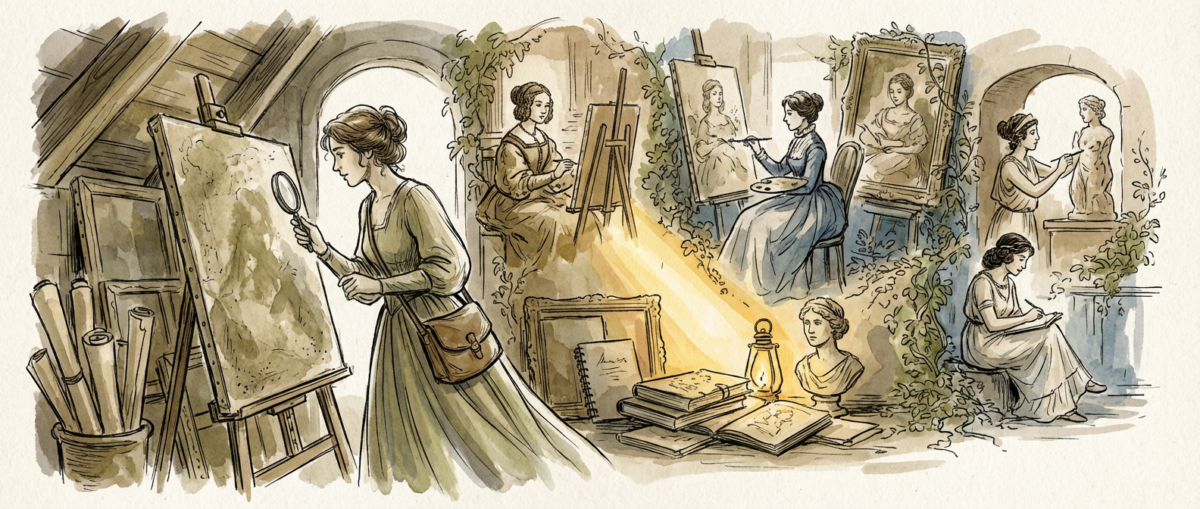
When Art History Tells Only Half the Story
Picture this: you’re standing in the Metropolitan Museum, surrounded by masterpieces that span centuries, and you start to notice something curious. Room after room, the nameplates read like a roll call of history’s most celebrated men. Michelangelo, Monet, Picasso, Van Gogh. Where are the women? Were they simply not creating art for thousands of years, or is there something else going on here?
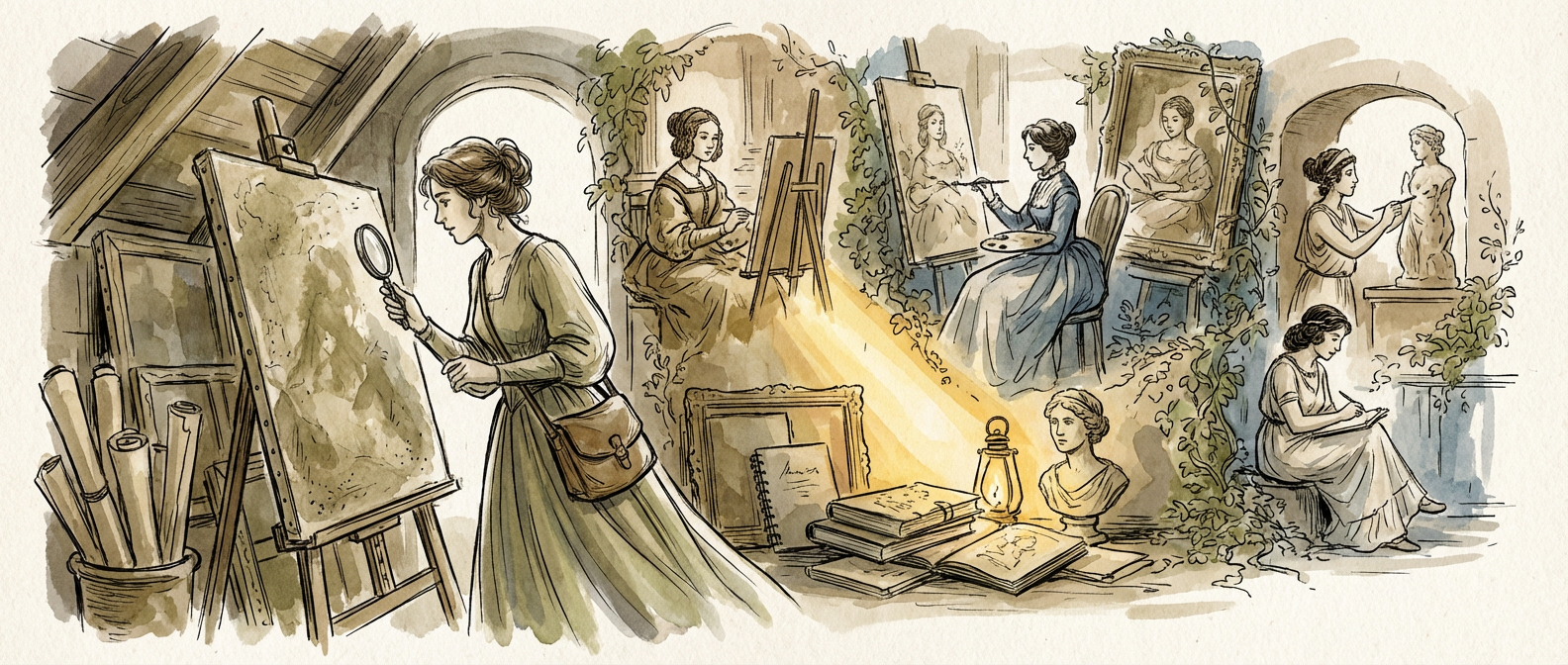
The truth is messier and more infuriating than the traditional narrative suggests. Women have been creating extraordinary art throughout history, but social restrictions, limited access to training, and systematic exclusion from the art world’s power structures meant their contributions got buried. Many works were attributed to male colleagues, forgotten entirely, or dismissed as mere “decorative arts.” Now art historians are working to uncover these lost voices, and what they’re finding is completely reshaping how we think about art history.
This isn’t just about fairness or checking boxes. When we rediscover these artists, we get access to perspectives, techniques, and ways of seeing that have been missing from our cultural conversation for centuries. We find innovations we thought belonged to later periods, emotional depths that challenge our assumptions about historical art, and visual languages that speak to experiences largely absent from the traditional canon.

The Women Who Broke Through Against All Odds
Some women artists did achieve recognition during their lifetimes, though usually under extraordinary circumstances. Take Artemisia Gentileschi, the Italian Baroque painter whose dramatic scenes of biblical and mythological women are now recognized as some of the most psychologically complex works of the 17th century. Her “Judith Slaying Holofernes” doesn’t just depict violence. It transforms violence into a statement about women’s agency and power that still feels startling today.
Gentileschi had advantages most women could only dream of. Her father was a successful painter who trained her in his workshop, giving her access to techniques typically reserved for male apprentices. Even with this support, she faced constant skepticism about her abilities. When she painted with the bold brushstrokes and intense chiaroscuro that marked the best work of her era, critics assumed her father had guided her hand.
Then there’s Élisabeth Vigée Le Brun, who became one of the most successful portrait painters of the 18th century. She created luminous works that captured both the grandeur and humanity of French aristocracy. Her self-portraits reveal an artist deeply aware of her own skill and position, painting herself with the same confidence she brought to depicting queens and countesses. Yet even as she commanded high prices and royal patronage, the art establishment’s doors remained largely closed to her.
The Artists Hiding in Plain Sight
For every Artemisia Gentileschi who achieved fame, dozens of equally talented women worked in the shadows. Their contributions got absorbed into the broader story of art without proper attribution. Many medieval illuminated manuscripts, those intricate masterpieces that preserved knowledge through the Dark Ages, were created by women in convents. Their delicate brushwork and innovative approaches to color and composition influenced the development of European art, yet their names rarely appear in historical records.
This pattern extends far beyond Europe. In traditional Chinese painting, women artists like Guan Daosheng created landscapes that rivaled those of their male contemporaries, using subtle ink washes and compositional techniques that would later influence entire schools of painting. In Mesoamerica, women potters developed sophisticated glazing techniques and decorative approaches that modern ceramicists still study and admire.
Here’s what really gets me: many works now attributed to famous male artists may have actually been collaborations with their wives, daughters, or female students. Art historians are examining works with fresh eyes, using new technology and documentary evidence to trace the hands of multiple artists in single paintings. Some discoveries are revolutionary. Others simply add layers to stories we thought we knew completely.
Modern Detectives Solving Art History’s Cold Cases
Today’s art historians have tools their predecessors never imagined. X-ray analysis can reveal under-paintings that suggest different artistic hands. Chemical analysis of pigments can date works more precisely and identify regional techniques. Most importantly, scholars are approaching familiar works with new questions, asking not just “who painted this?” but “who else might have been involved?”
Archives around the world are being re-examined with gender-conscious eyes. Letters, contracts, and household inventories that once seemed boring are now yielding crucial information about women’s artistic activities. A contract for paint supplies might reveal that a master’s wife was actively involved in creating works attributed solely to him. An inventory might list artistic tools among a woman’s possessions, suggesting a creative practice that history overlooked.
Social media has also democratized art historical research in unexpected ways. Amateur enthusiasts, armed with digital archives and collaborative platforms, are making connections that academic researchers might miss. A quilting enthusiast might notice technical similarities between historical textiles and manuscript illuminations. A ceramics collector might spot glazing techniques that bridge cultures and centuries.
Why This Recovery Matters Today
Uncovering these lost artists isn’t just an academic exercise. It’s changing how we see art, creativity, and human capability. When we understand that innovation has always come from diverse voices, we become more open to recognizing breakthrough work happening in our own time, regardless of who’s creating it.
These rediscovered artists also offer fresh perspectives on familiar historical periods. A woman’s view of domestic life in the Renaissance reveals details that male artists missed or ignored. Her approach to portraiture might emphasize psychological insight over social status. Her landscapes might focus on spaces where women actually lived and worked, rather than the idealized vistas preferred by her male contemporaries.
These discoveries remind us that creativity has never been the exclusive domain of any single group. Art emerges from human experience, and human experience has always been beautifully, necessarily diverse. When we expand our definition of who gets to be called an artist, we enrich our understanding of what art can be and do.
The next time you visit a museum or browse art books, try looking with new eyes. Ask yourself whose voices might be missing from the galleries around you. Research the women artists from periods and regions that interest you. You might be surprised by what you find, and you’ll certainly never see art history the same way again.